
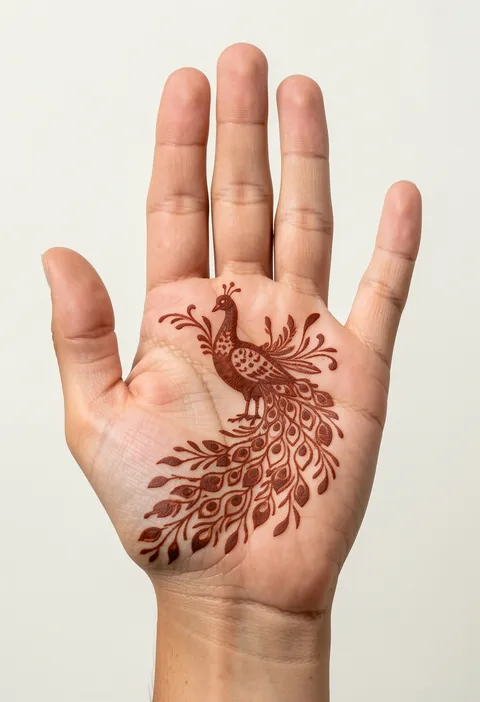
Designing for the palm
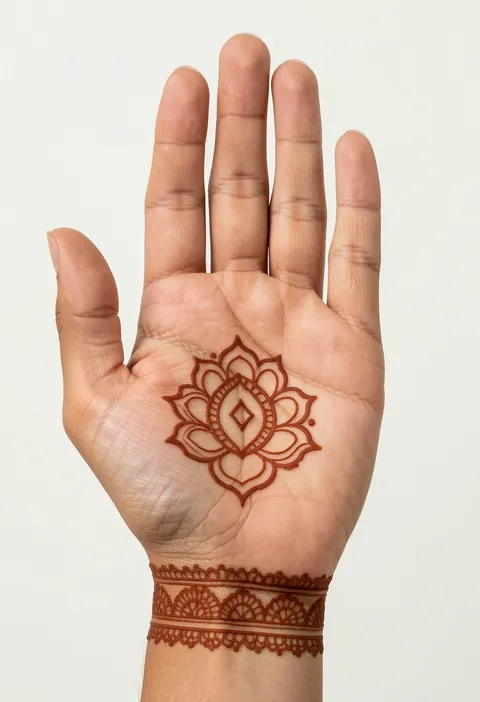
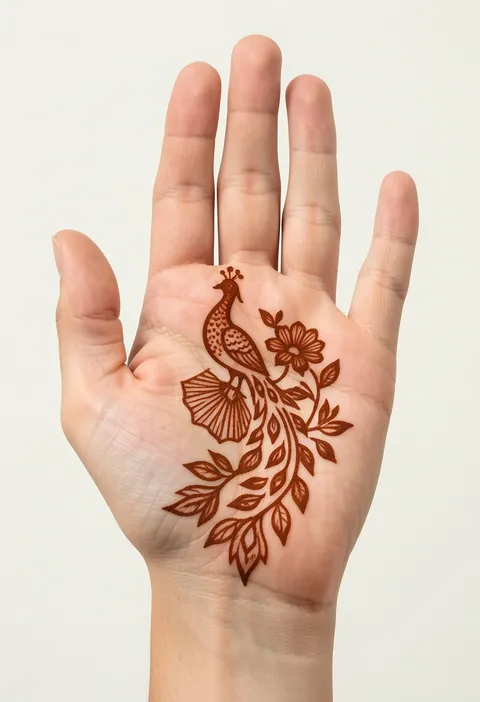
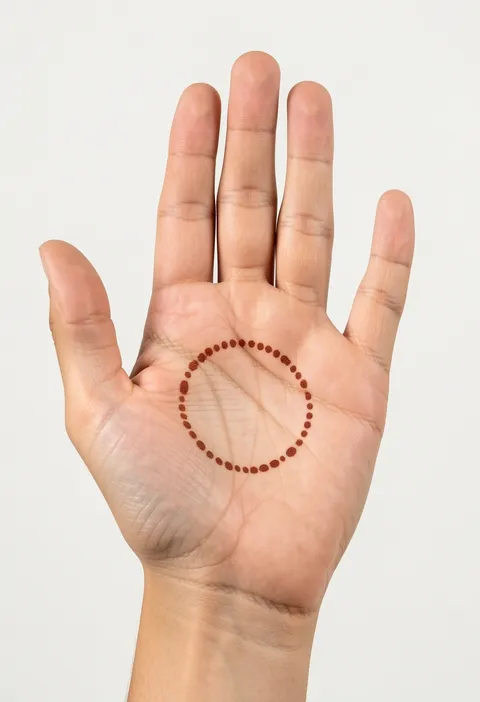
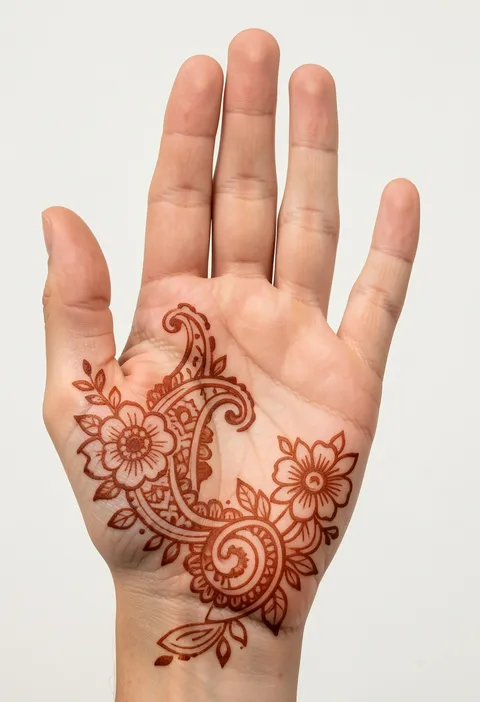
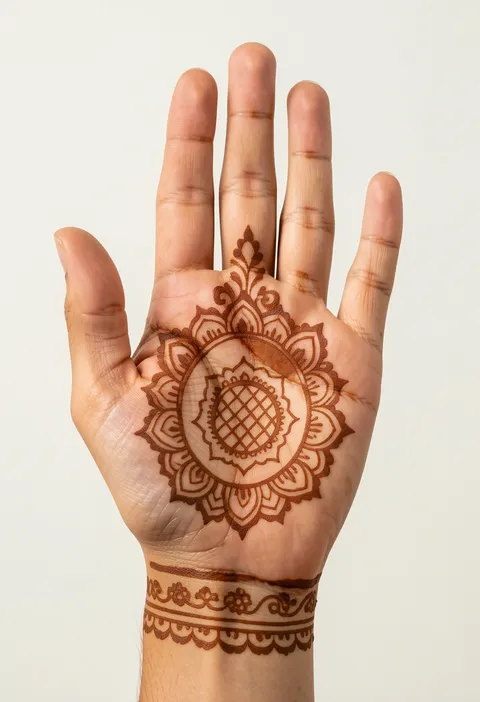
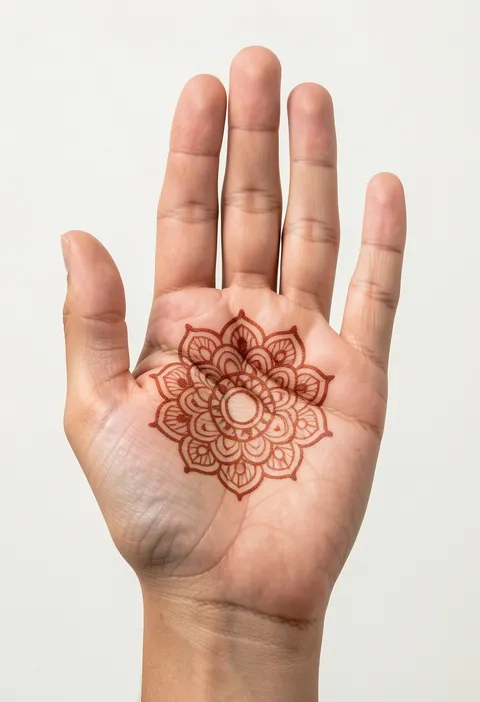
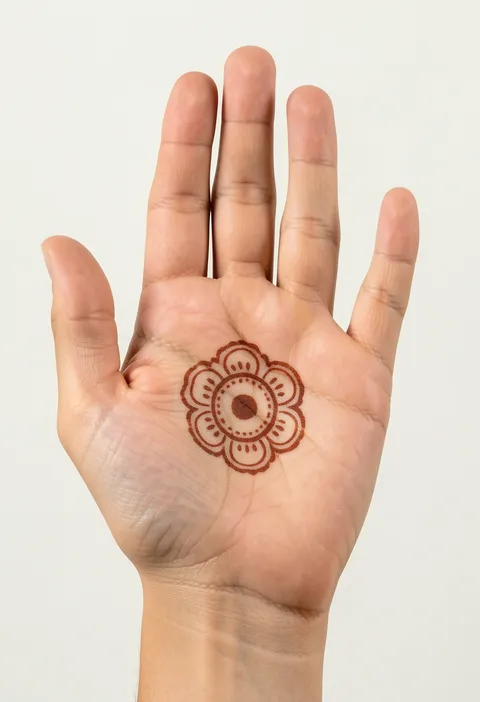
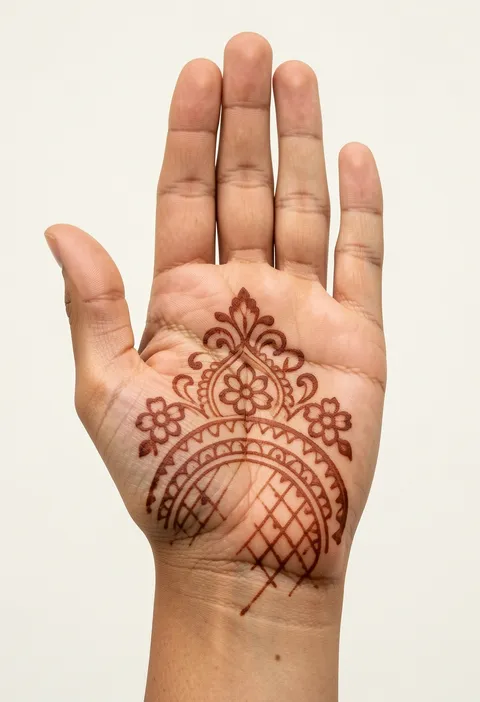
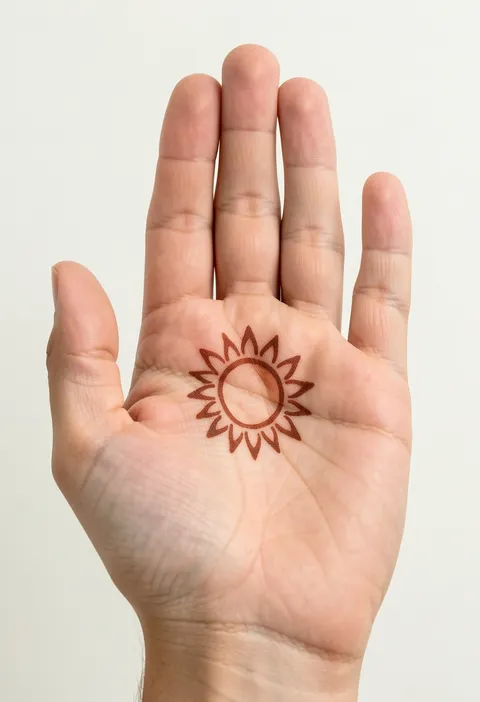
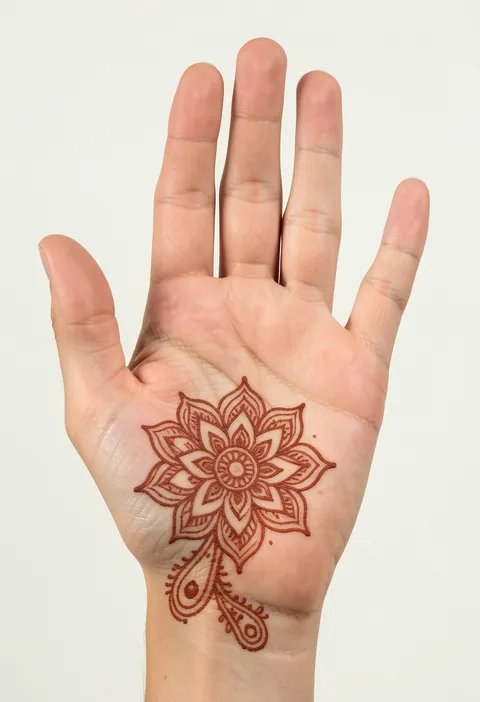
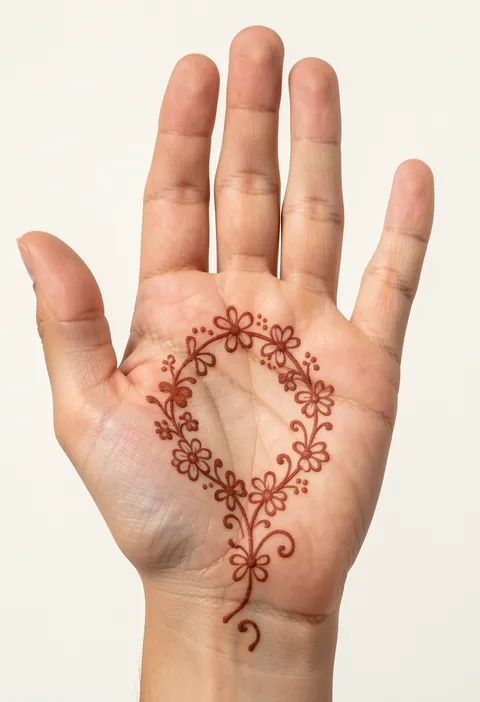
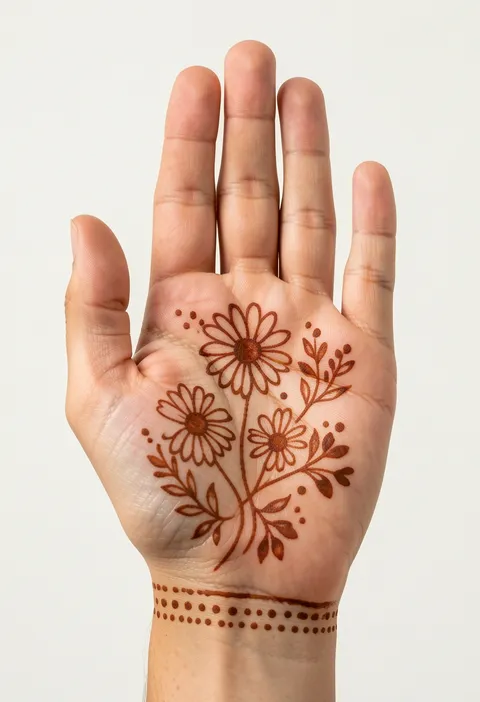
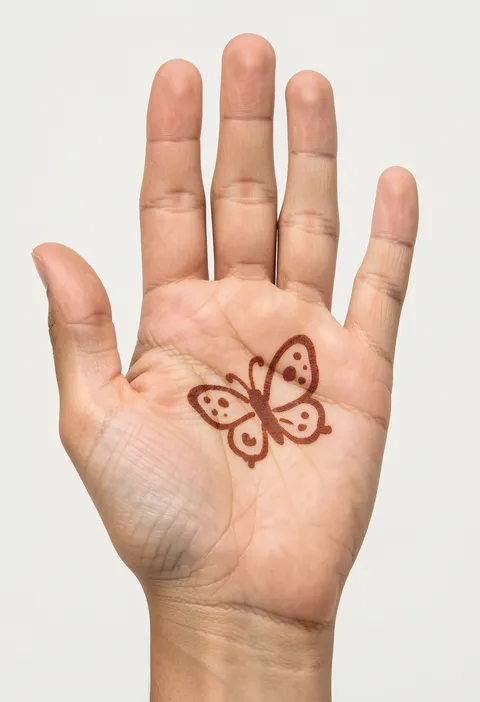
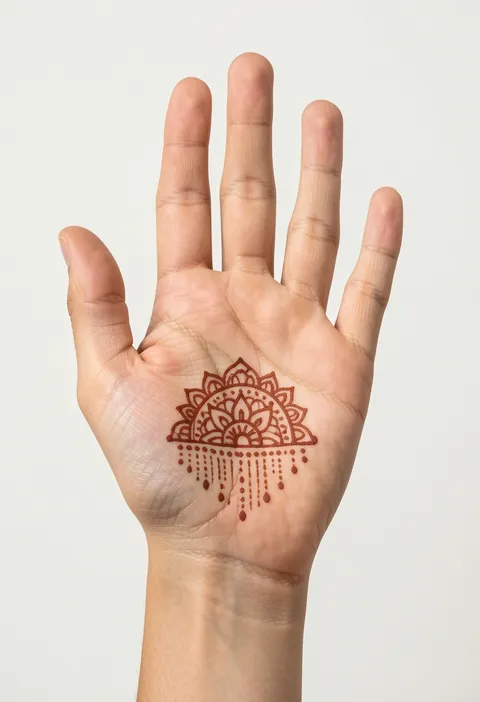
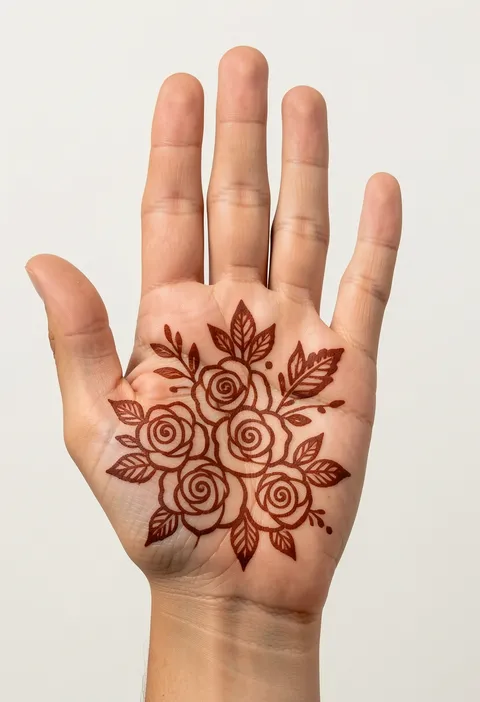
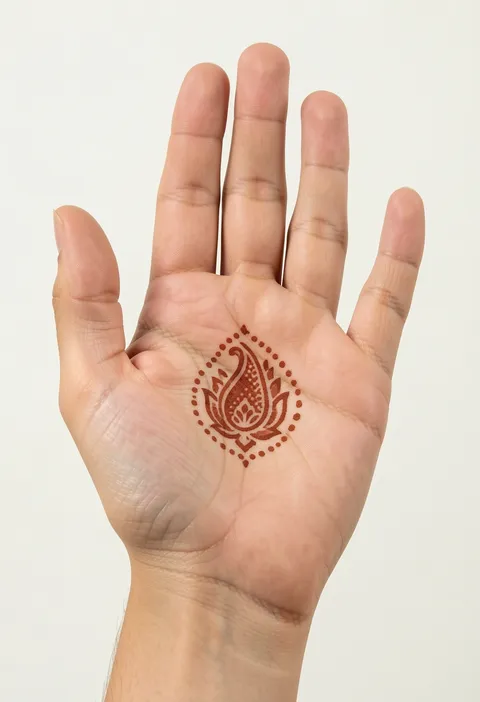
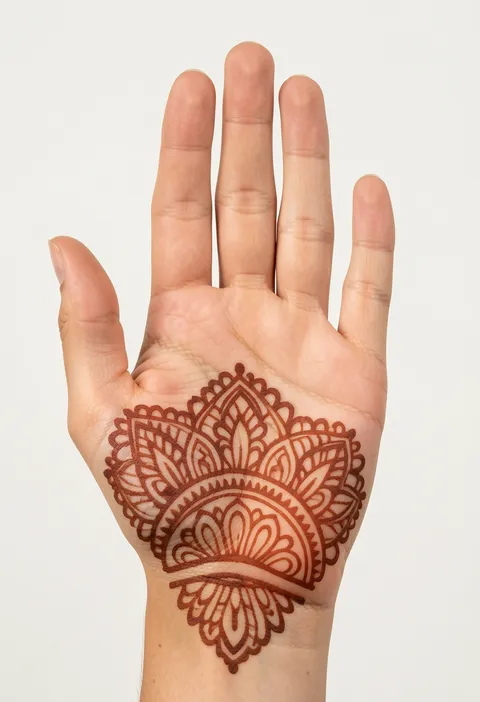
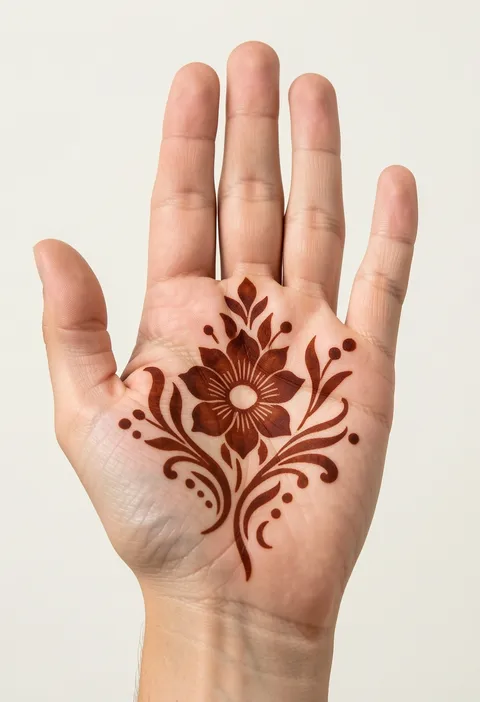
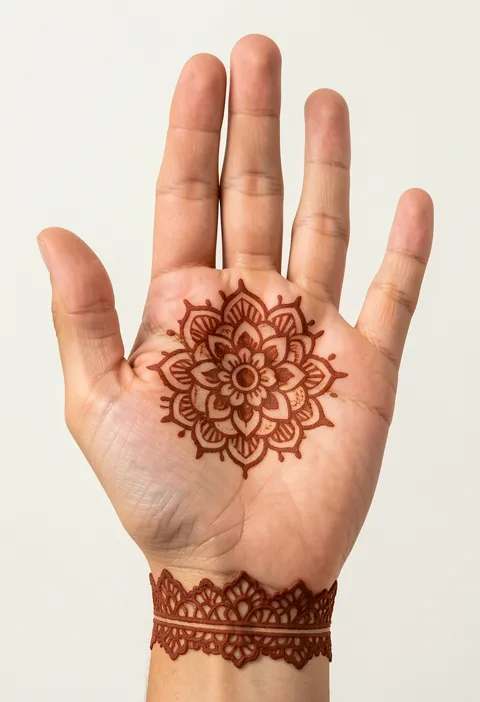
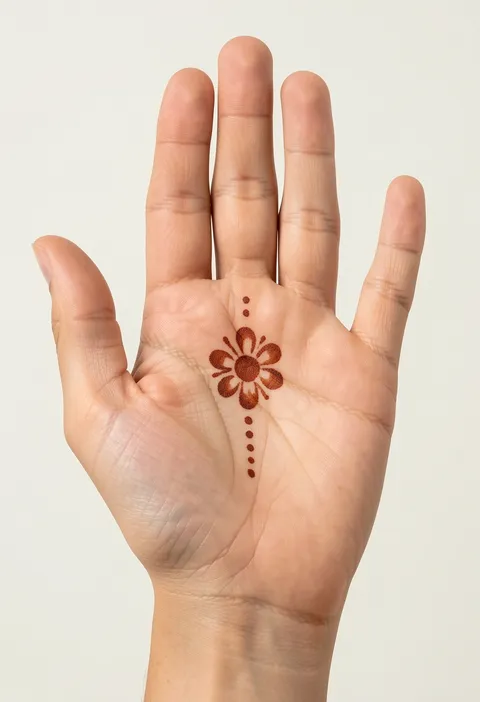
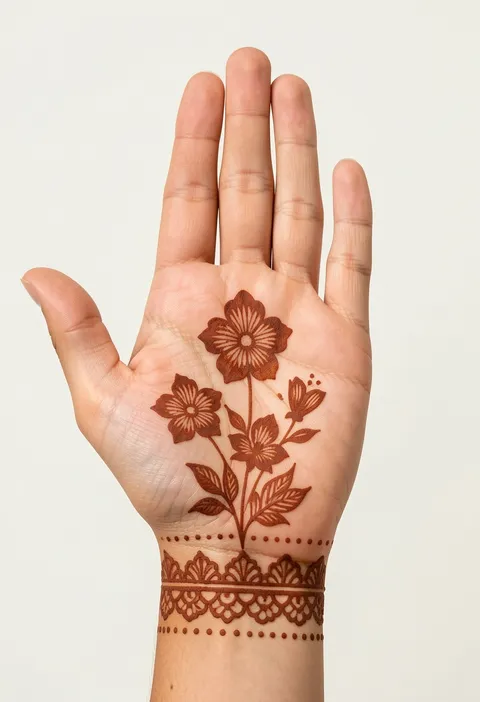
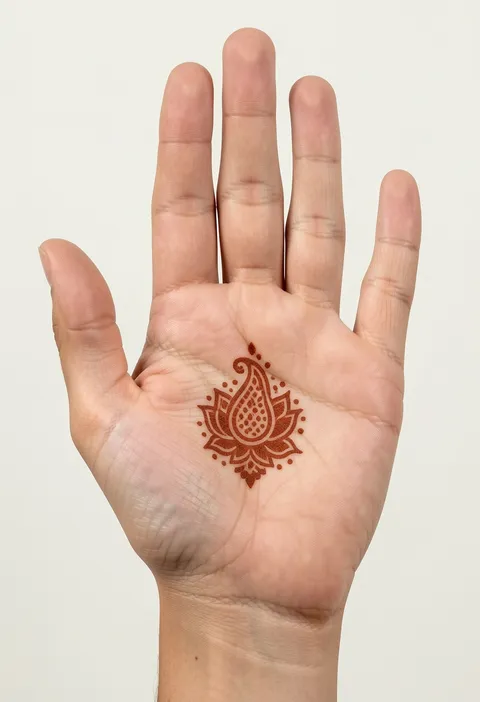
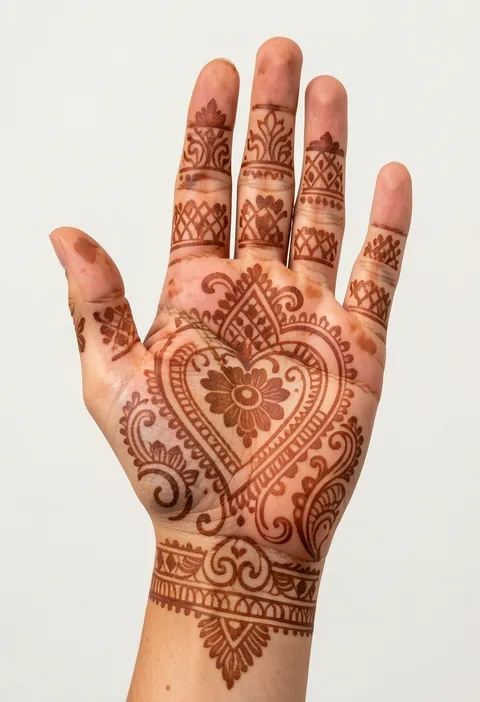
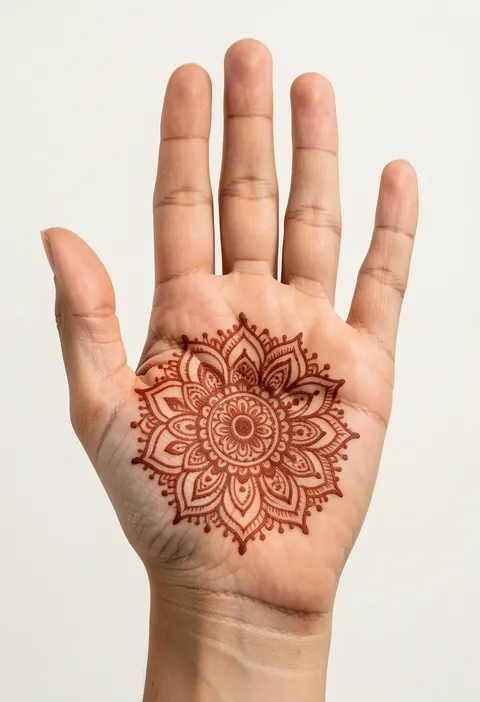
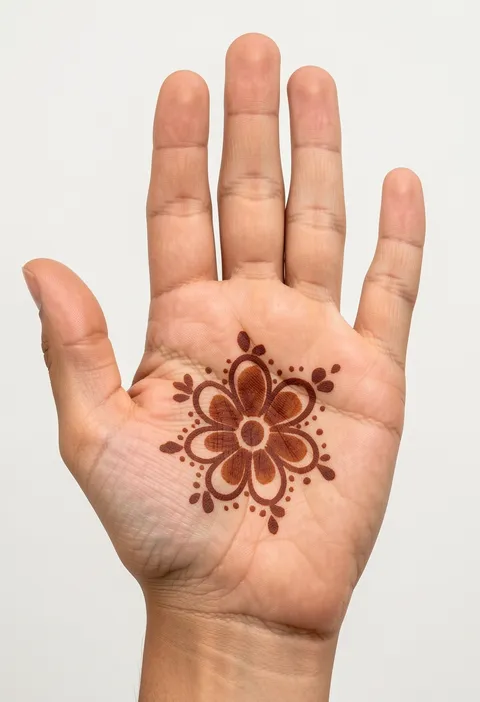
The palm is a cup, not a flat sheet, so central medallions and mandalas sit best. Radiate lines outward from a centre point, then finish the fingertips with caps, bands or a simple dotted line. Because the stain is darkest here, thin-line detail shows up well.
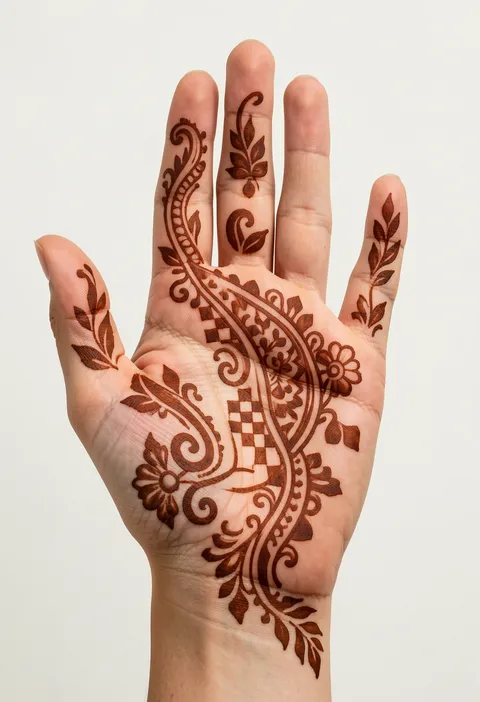
A common mistake is a design that stops at the base of the fingers. Carrying at least one element onto each finger, even just a ring, keeps the hand looking finished when it is open.
Styles you will find here
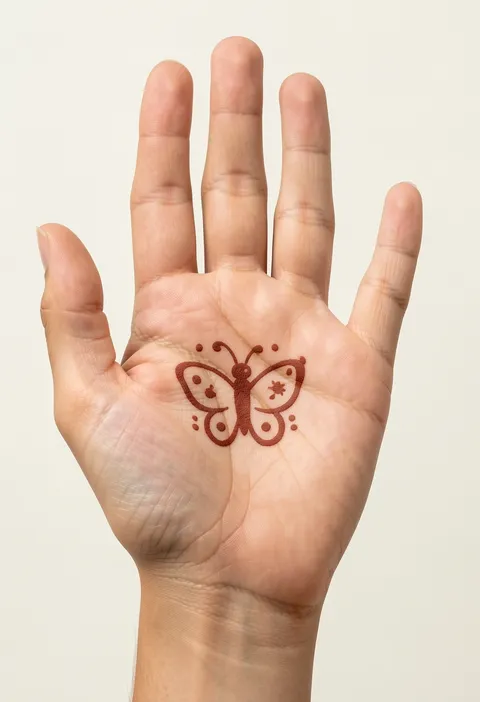
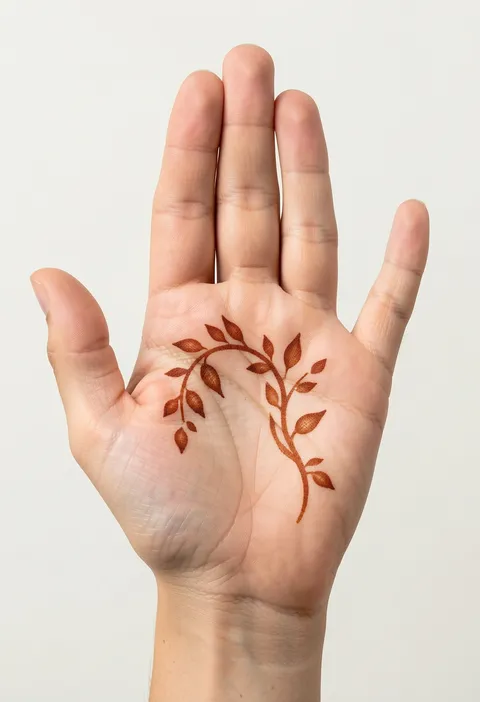
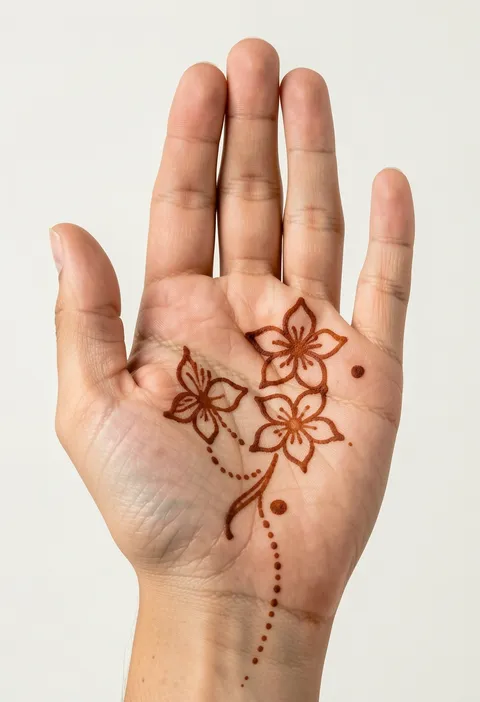
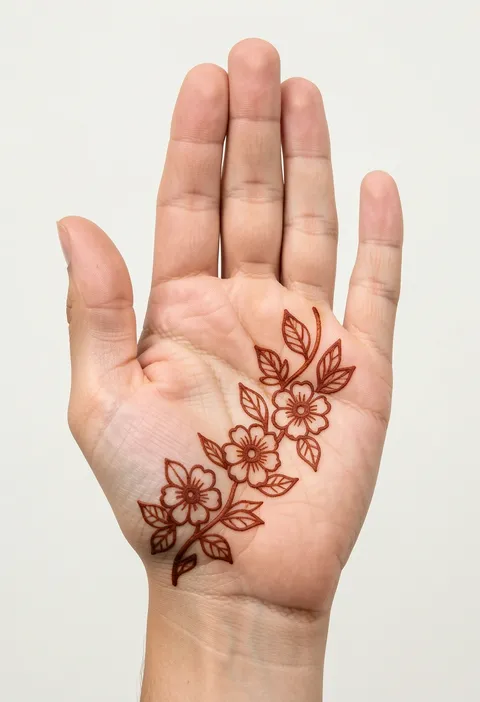
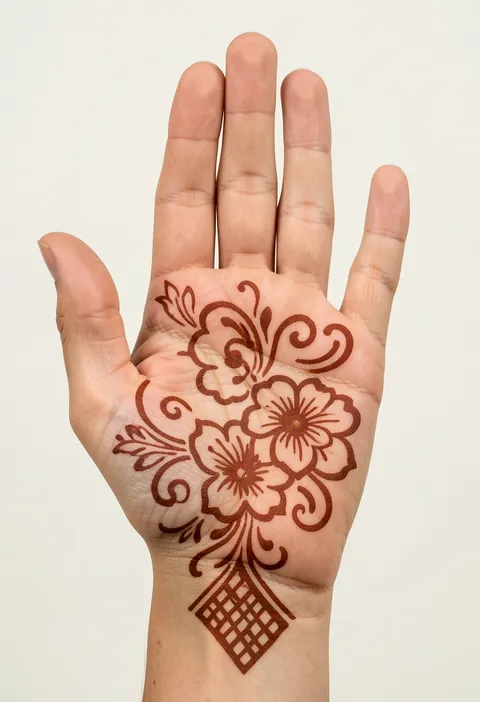
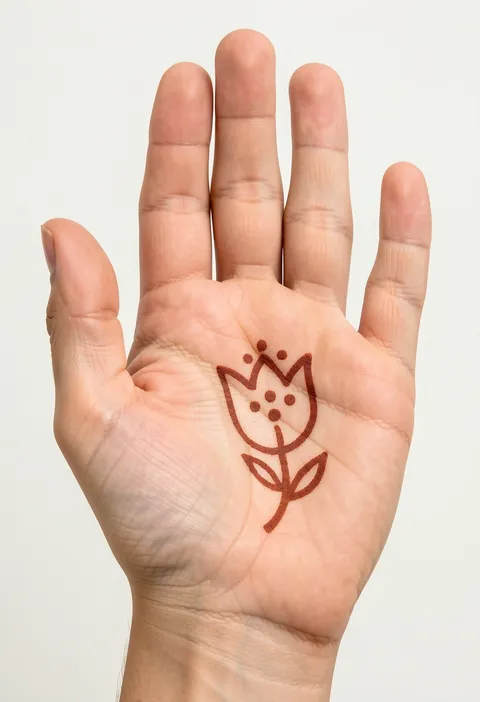
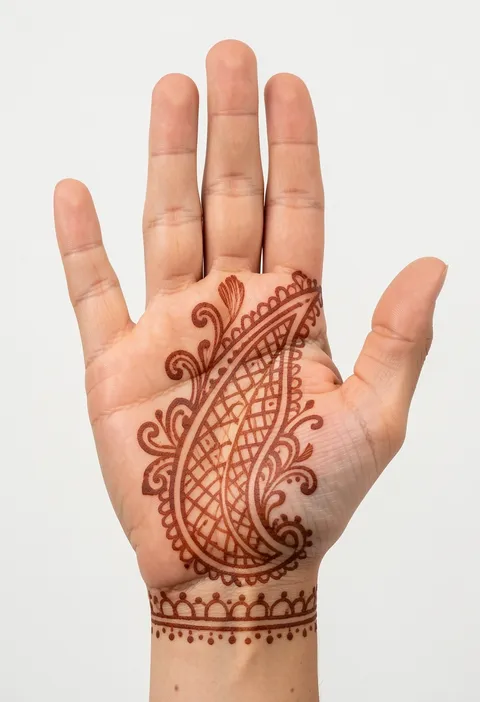
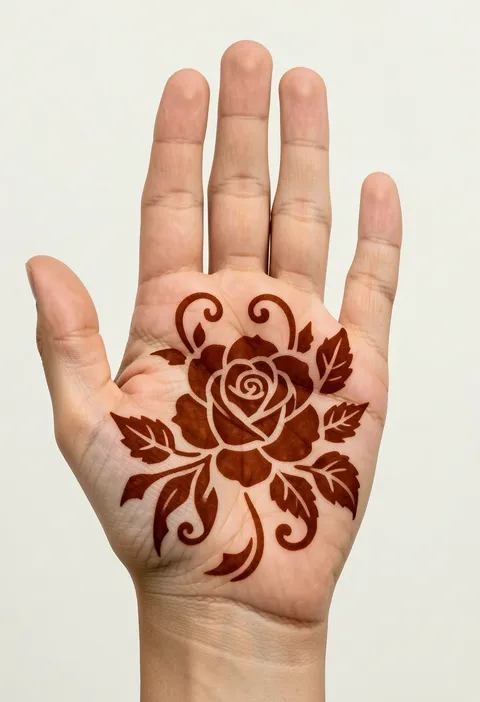
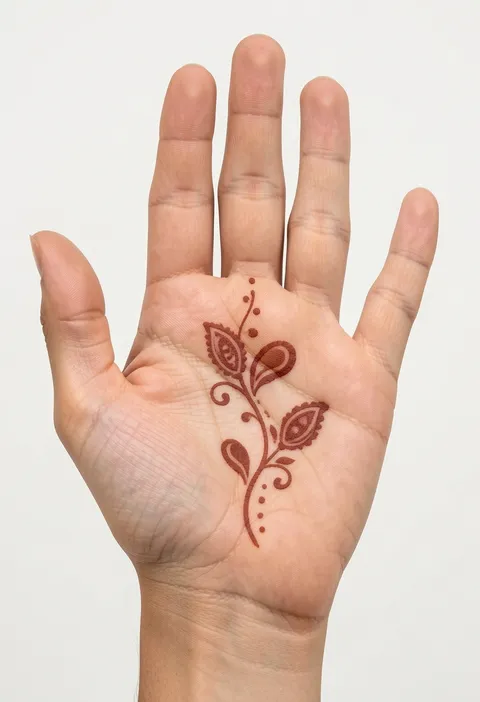
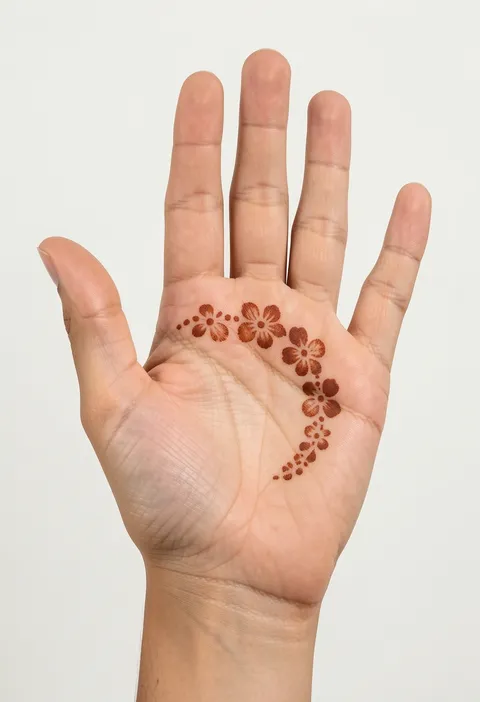
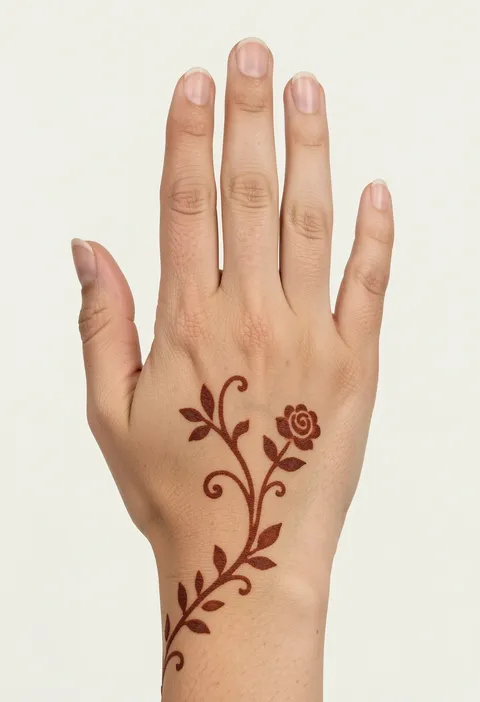
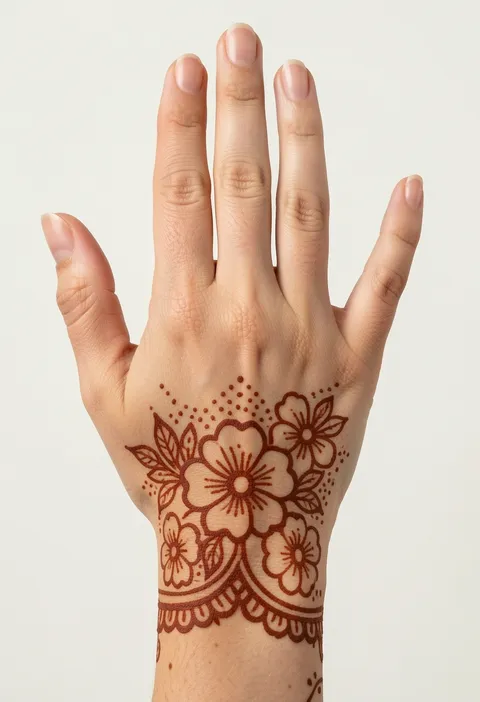
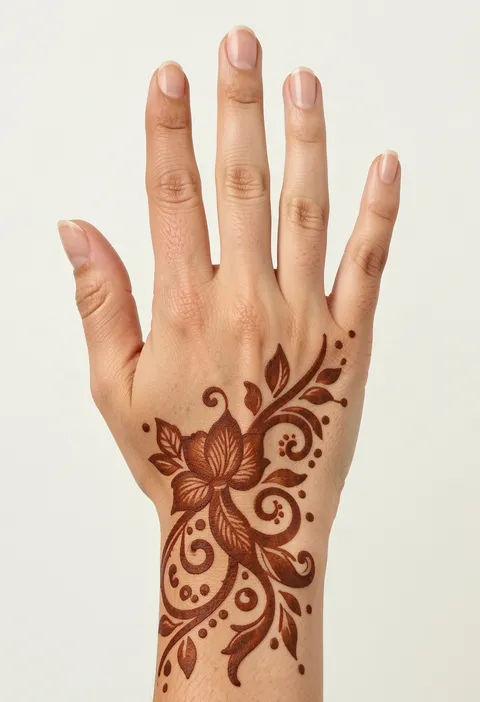
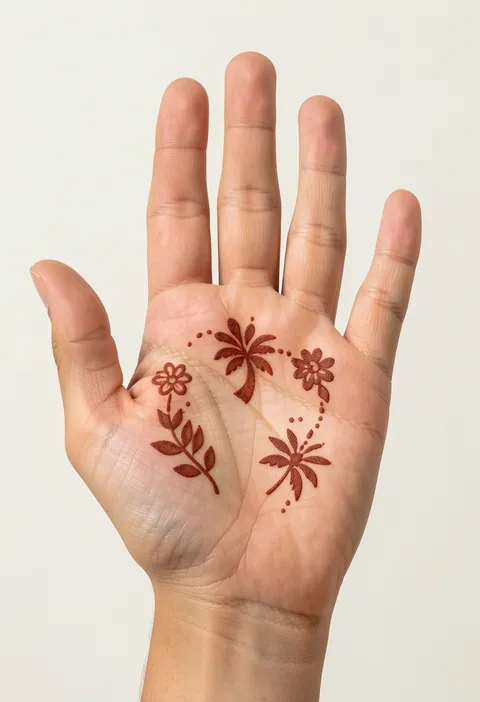
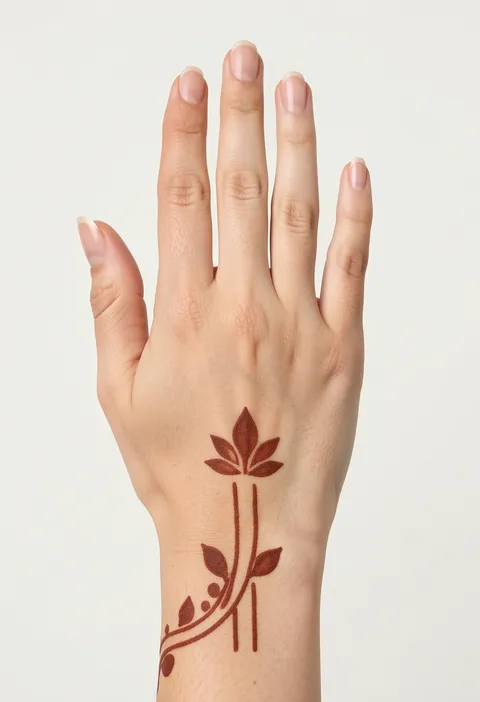
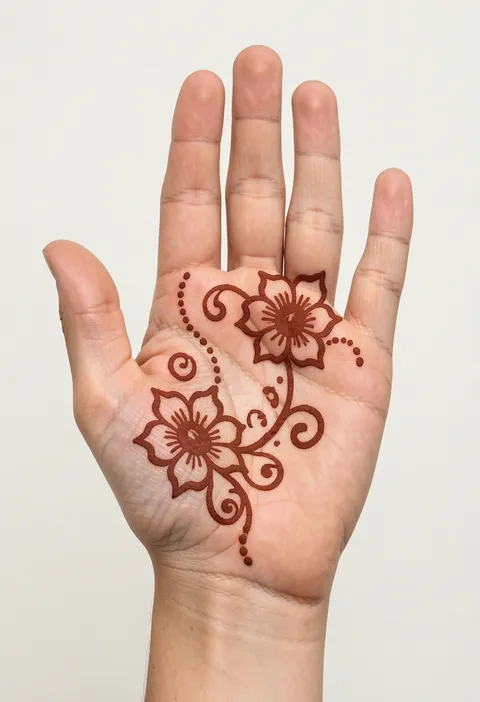
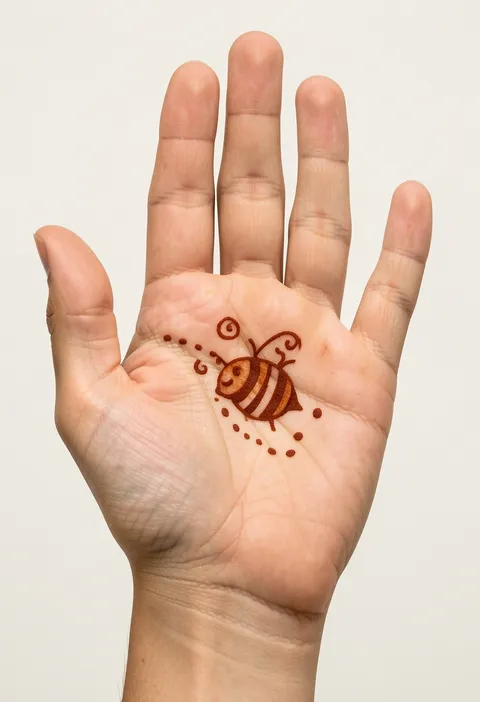
Bridal palms are the fullest, often with a central figure or mandala and dense fill to the fingertips. Arabic palms keep a diagonal sweep of florals with open skin on one side. Minimal palms may be a single medallion and nothing else. For kids, look for small centre motifs that dry in minutes.
For the darkest stain, leave the paste on for at least six hours, keep the area warm, and avoid water for the first twelve hours after it flakes off.
Frequently asked questions
Why is palm mehndi darker than back hand mehndi?
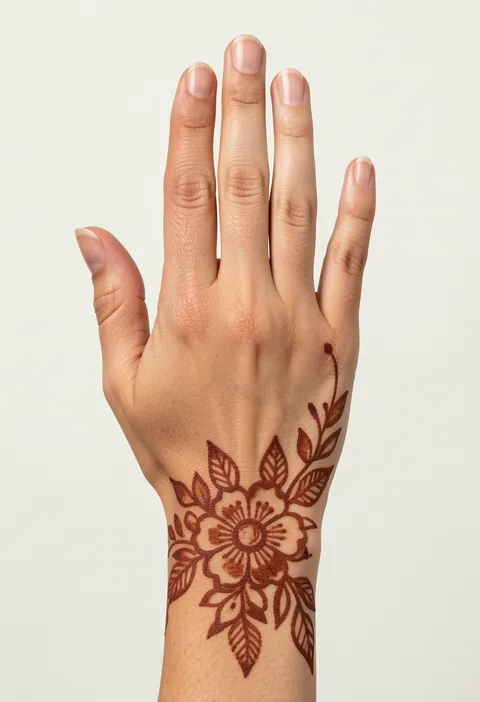
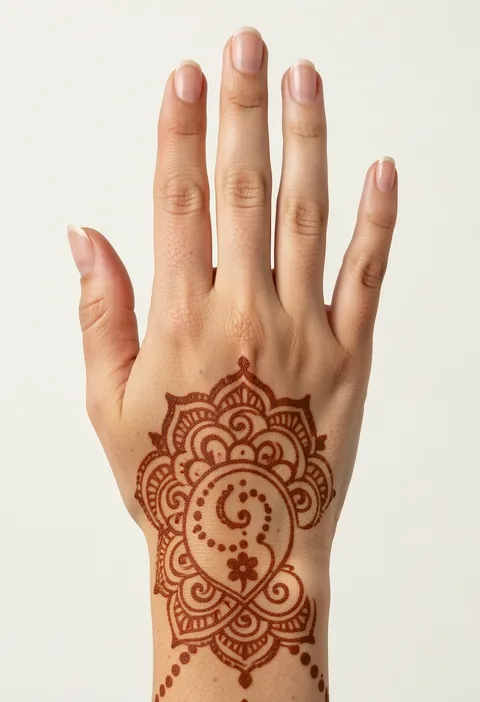
Palm skin is thicker and has more keratin, which the henna dye binds to. The same paste gives a deep maroon on the palm and a lighter brown on the back of the hand.
How long does front hand mehndi take to apply?
A minimal palm design takes 15 to 20 minutes. A full bridal palm with fingertips can take 60 to 90 minutes per hand.
Should the design be the same on both palms?
For bridal looks, yes, mirrored. For everyday wear, a design on one palm only is common and quicker.
