
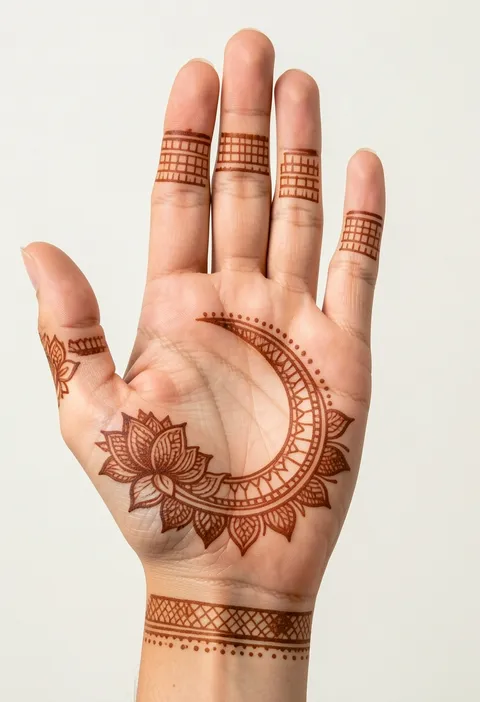
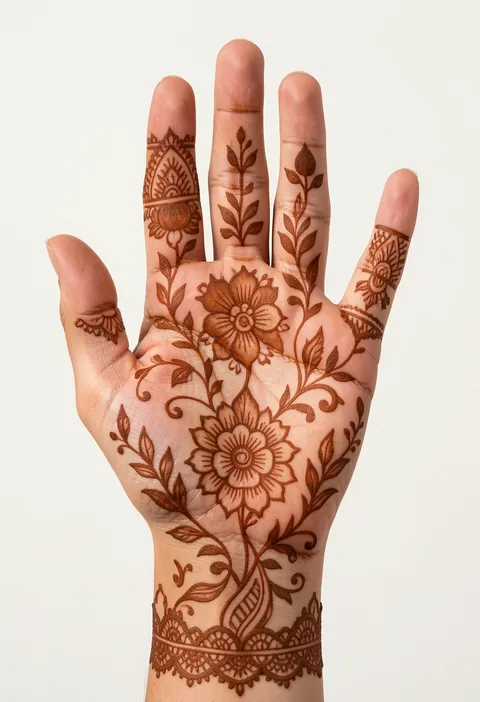
Bridal palm designs
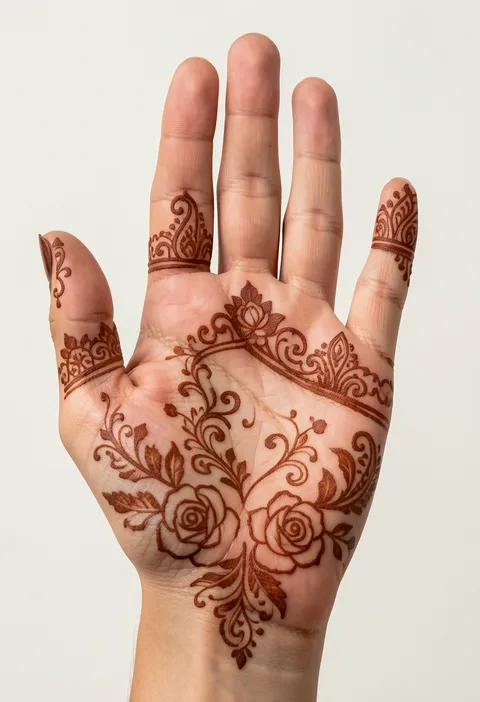
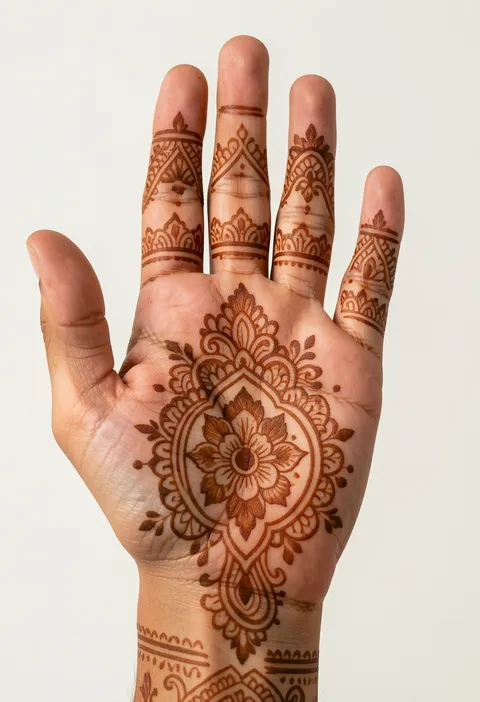
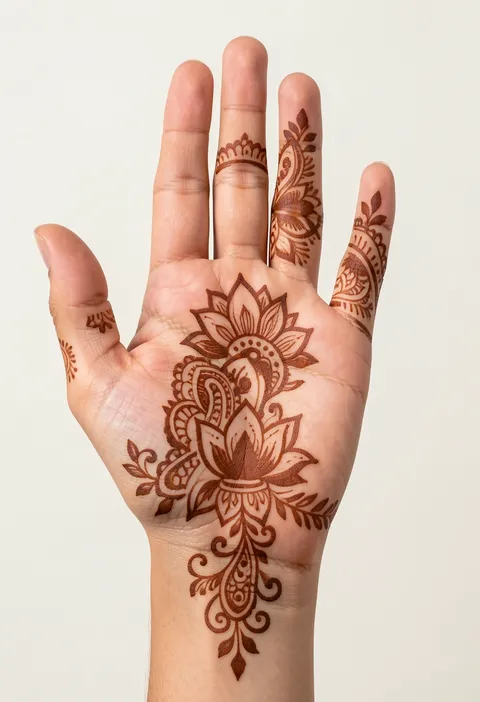
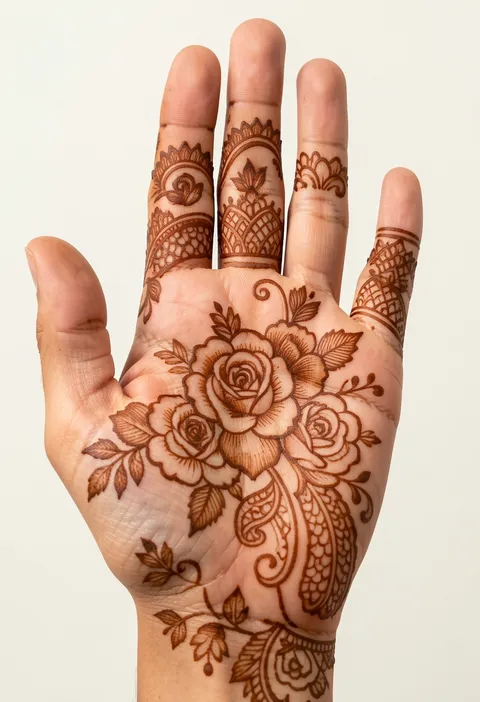
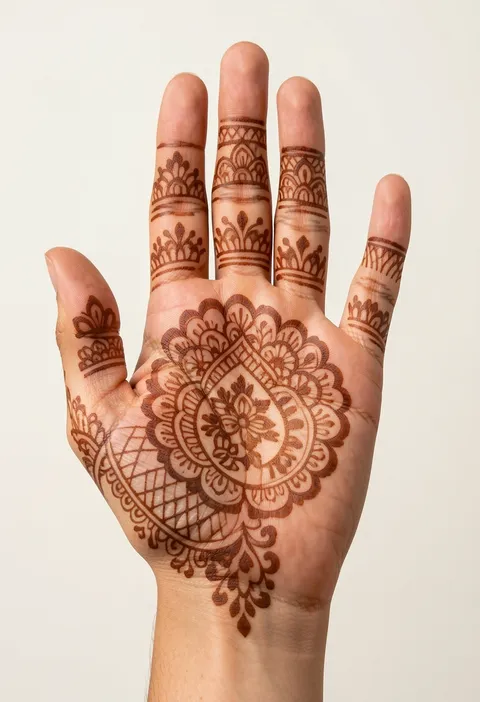
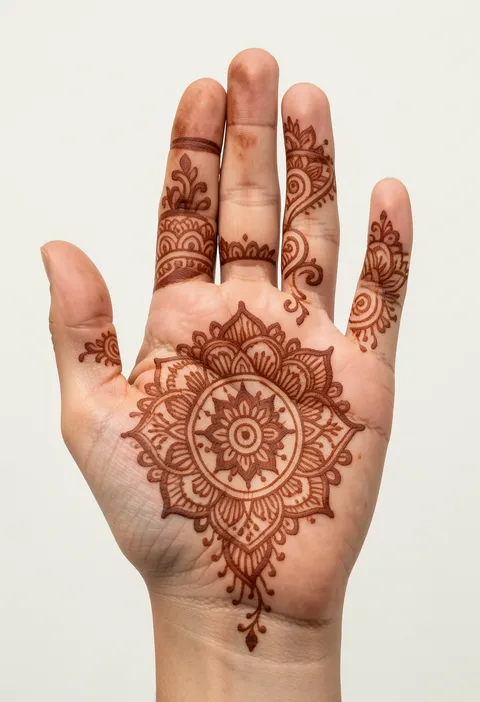
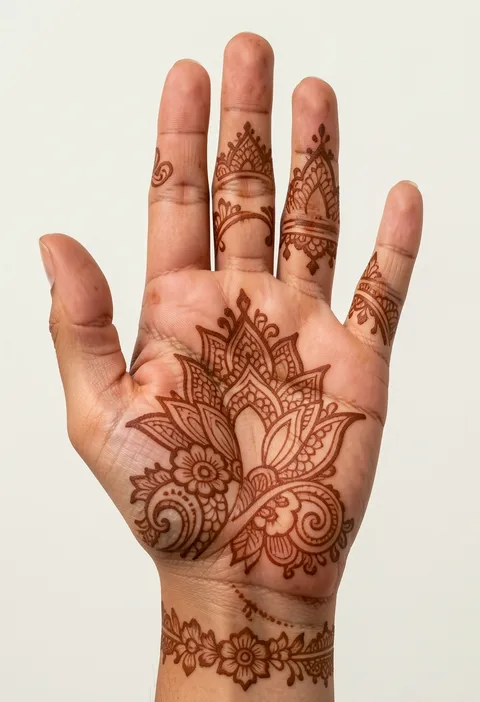
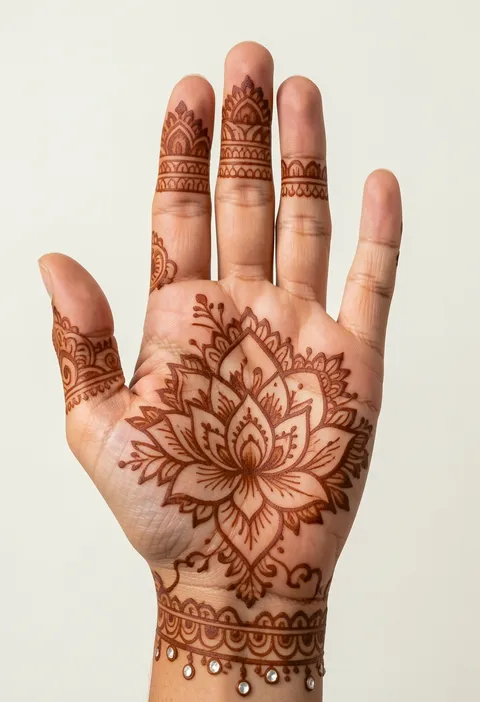
The palm holds the mandala, the peacock or the bride-and-groom figure, with lattice fill out to capped fingertips.
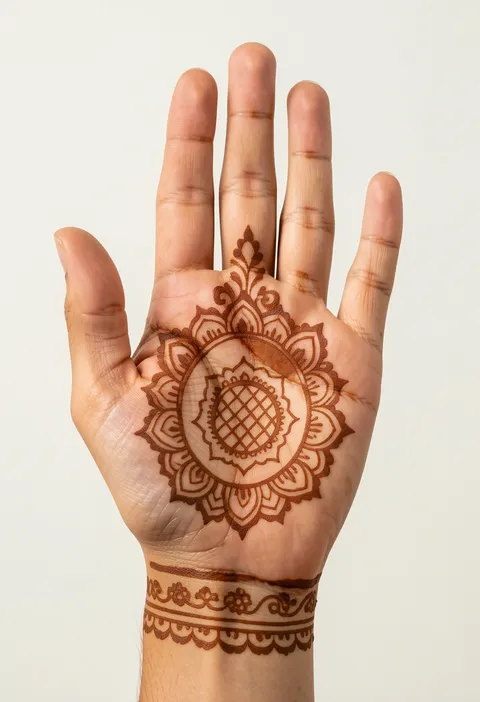
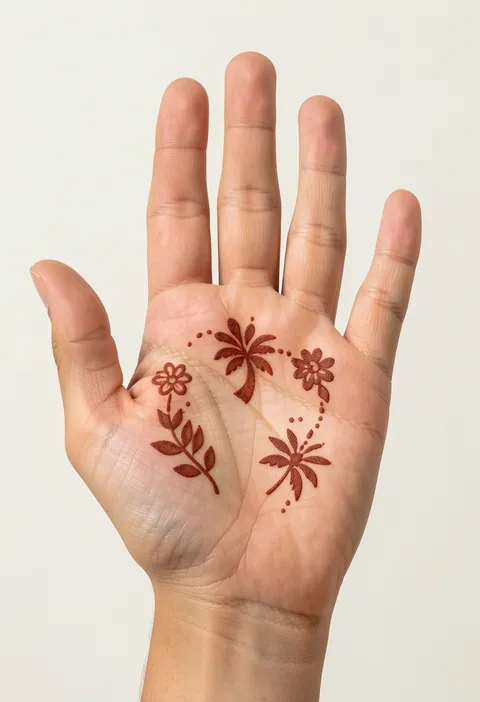
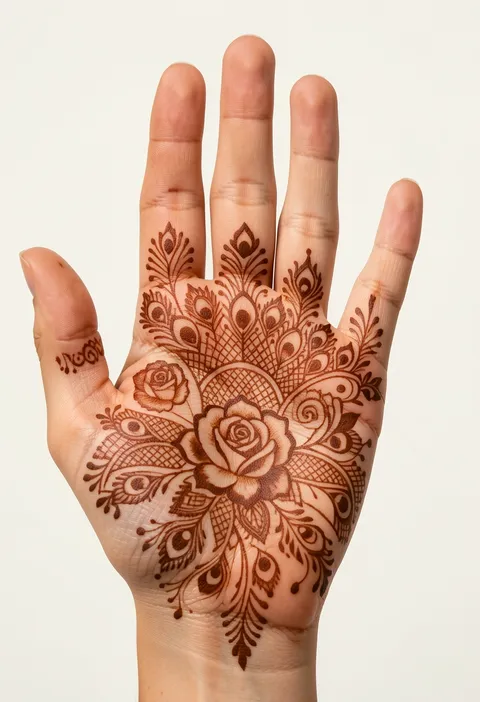
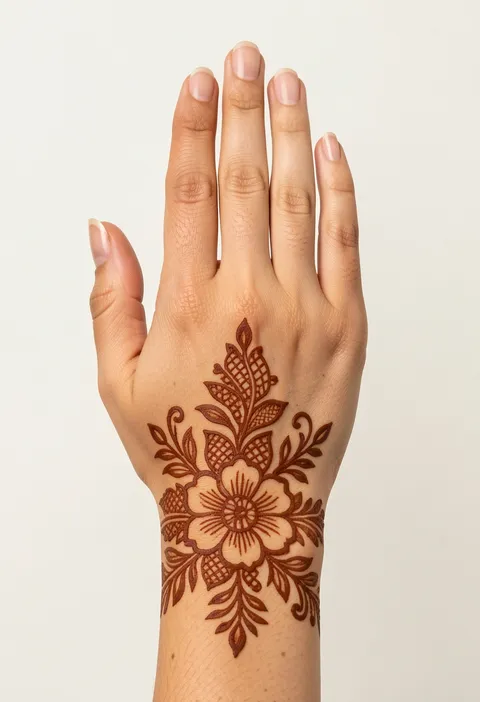
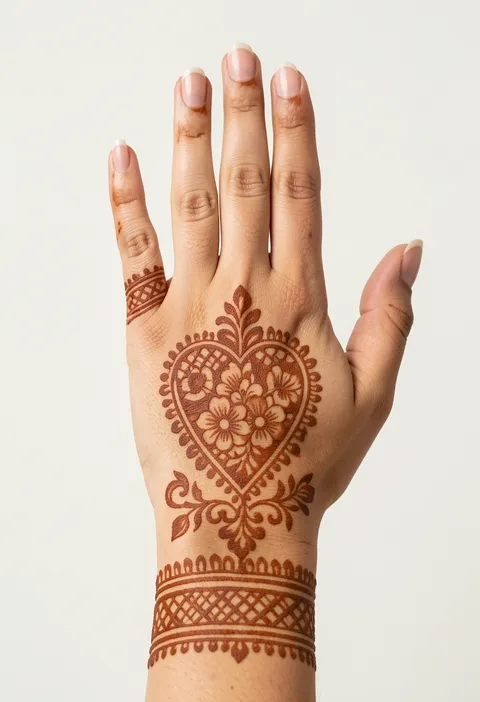
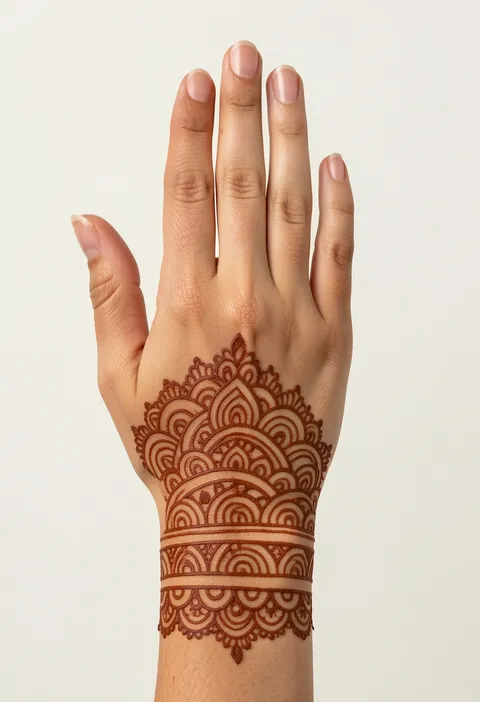
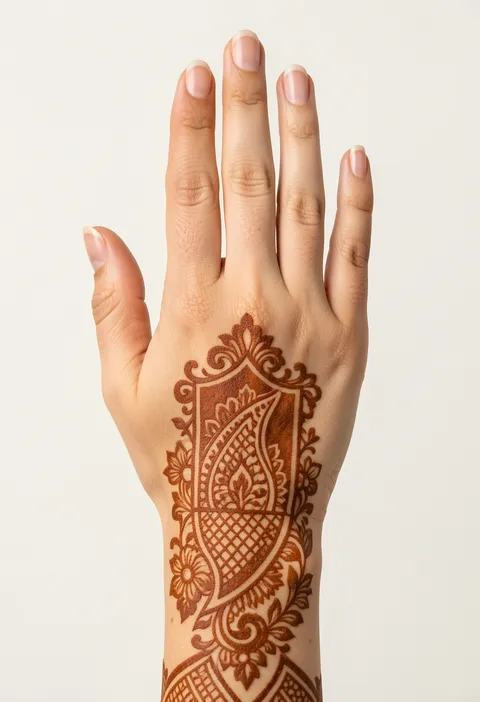
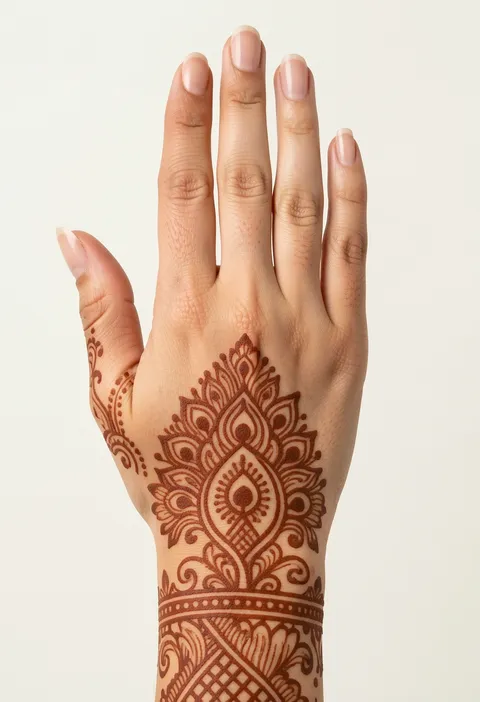
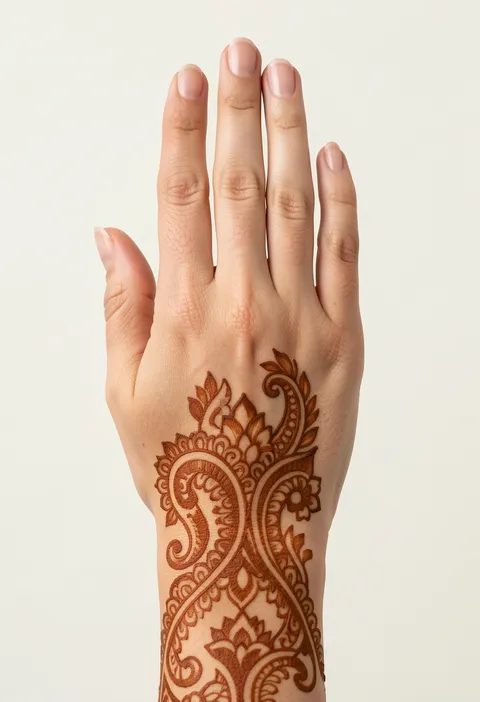
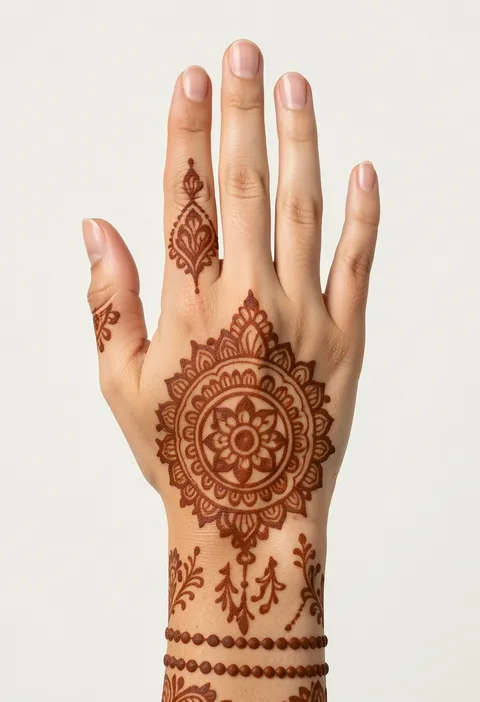
Bridal back hand designs
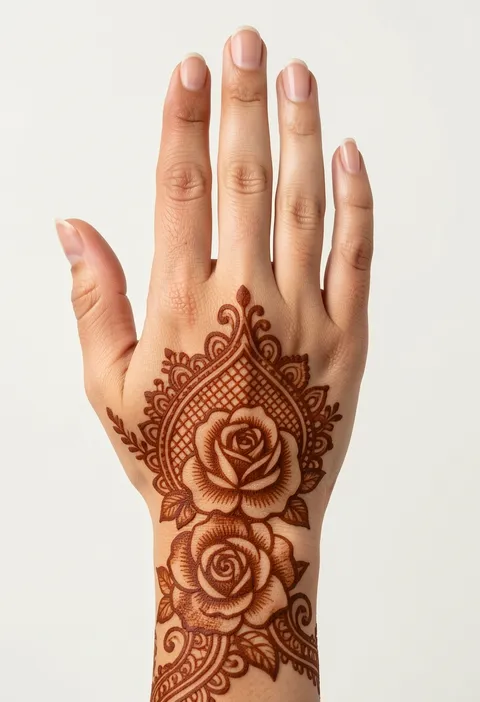
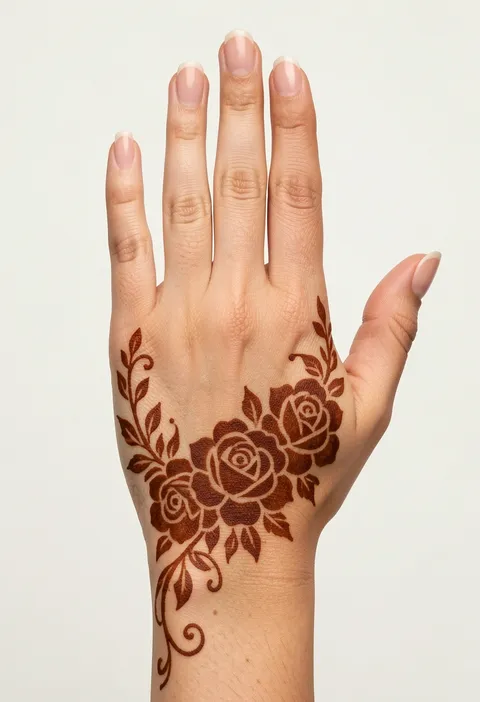
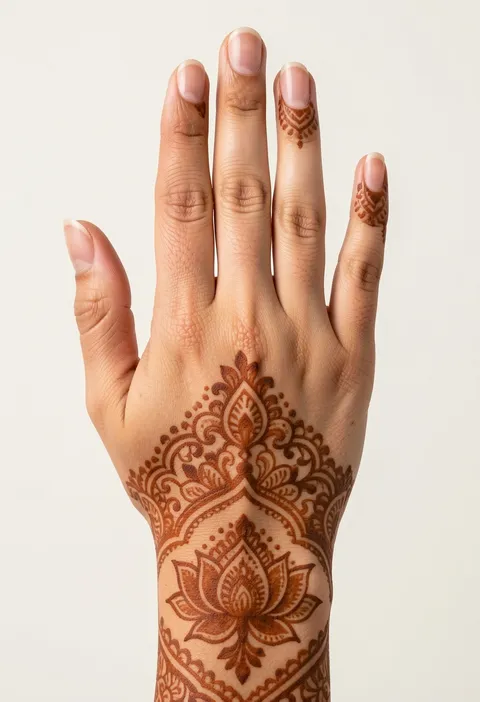
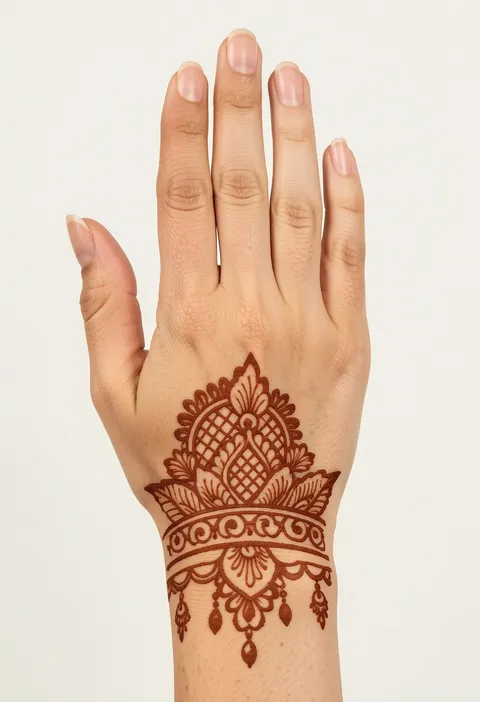
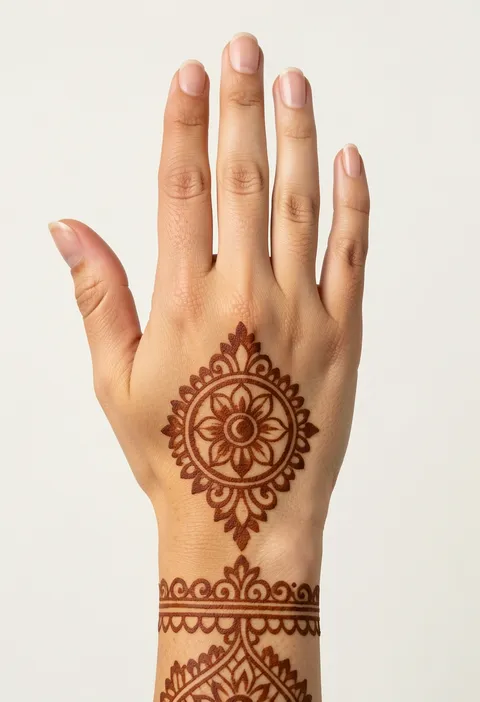
A wrist cuff, a central medallion, jaal between them, and every finger patterned to the tip.
Pairing the two sides
Choose the palm first, because it is the side that shows in most wedding photographs. Then pick a back-hand design in the same density with a different centrepiece so the two do not repeat. Keep the wrist cuff consistent across both sides so the design reads as one piece when the hand turns.
Timing
Apply on the mehndi night, two days before the wedding. Keep the paste on overnight. The stain peaks around 48 hours after removal, which lands exactly on the wedding day. Avoid water, scrubbing and hand sanitiser in between.
Browse every bridal design, or see the engagement designs guide for the ceremony before.
Frequently asked questions
Should the palm and back hand designs match?
Match the style, not the layout. A mandala or figure on the palm with a lattice and cuff on the back is the usual pairing.
How long does full bridal mehndi take?
Three to five hours for both hands and feet, longer with a full-arm extension. Book the artist for the mehndi night, two days before the wedding.
How do I keep bridal mehndi dark until the wedding?
Keep the paste on overnight, seal it with lemon and sugar, scrape rather than wash, avoid water for a day, and oil the hands lightly each morning.
