
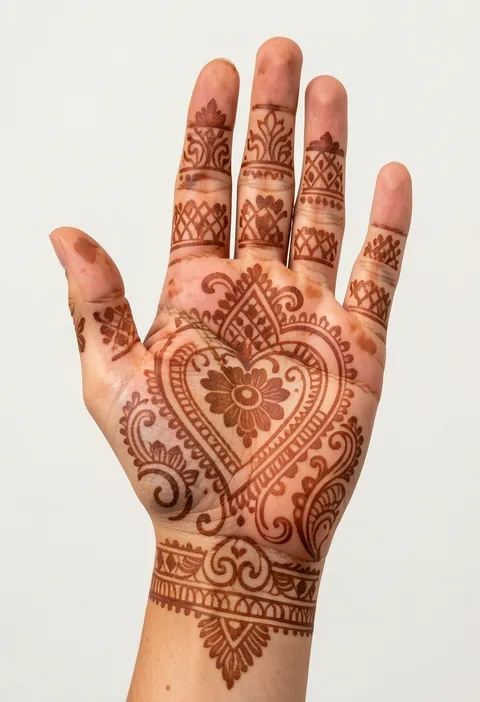
Anatomy of a bridal design
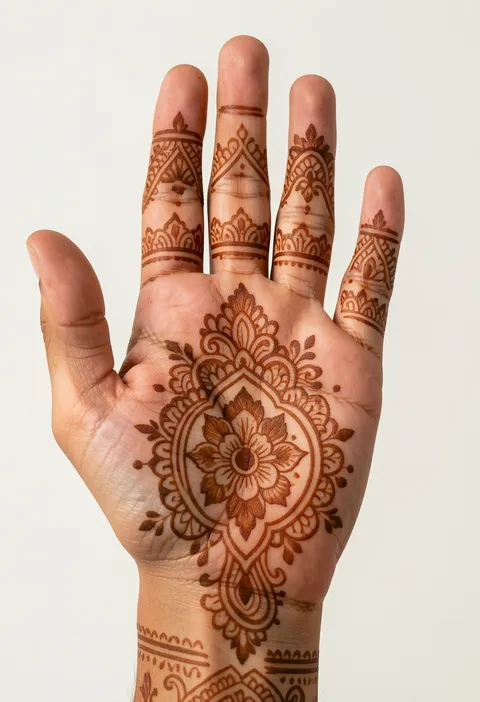
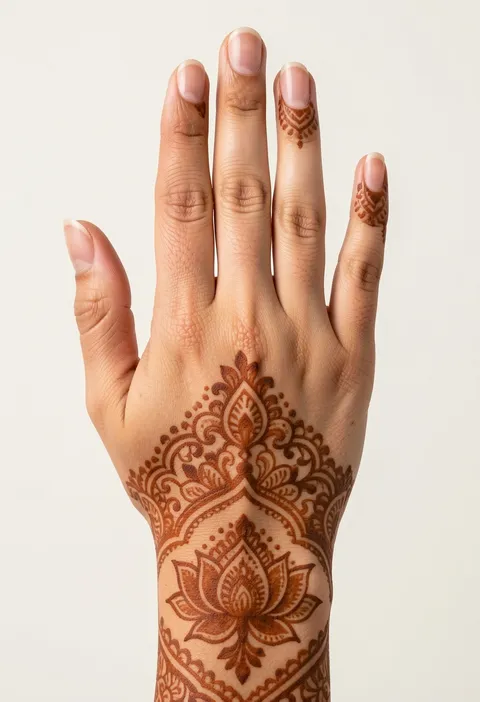
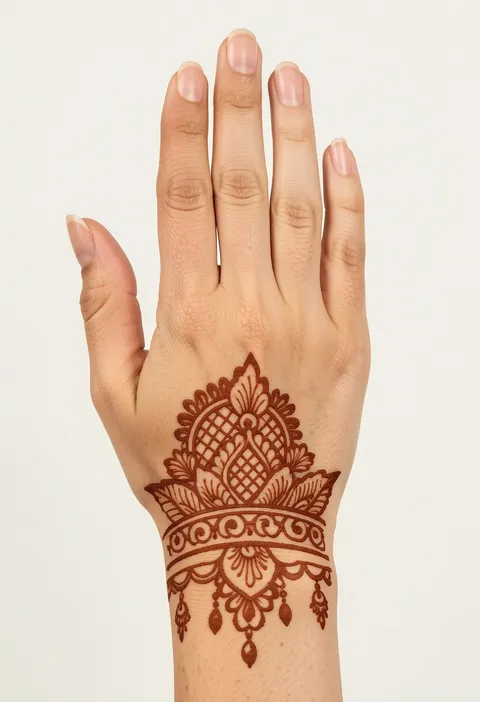
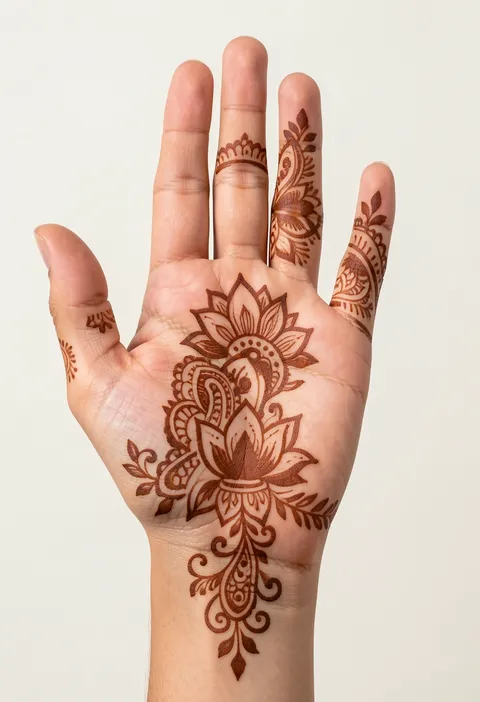
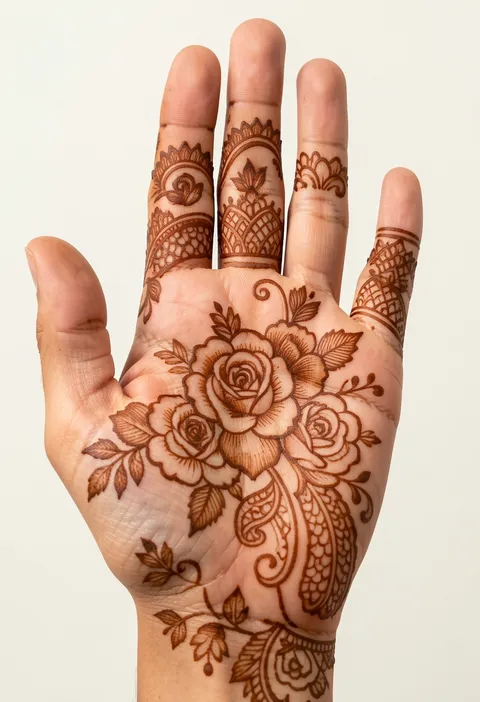
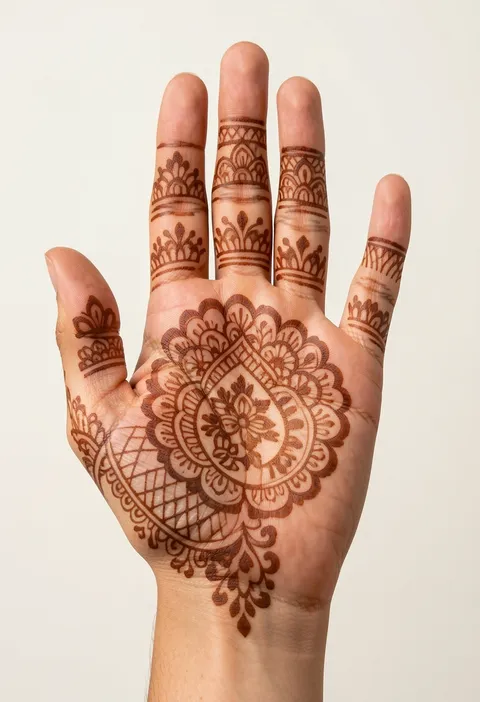
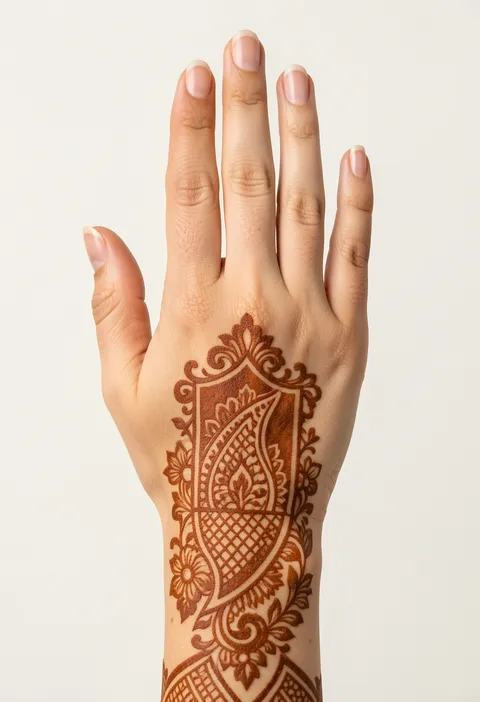
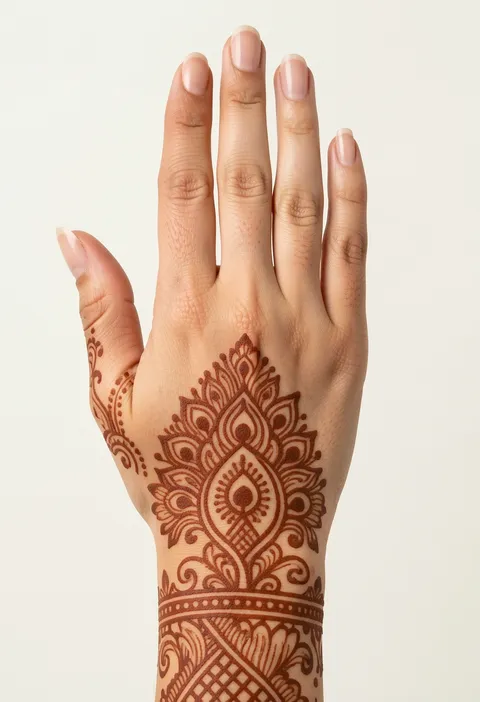
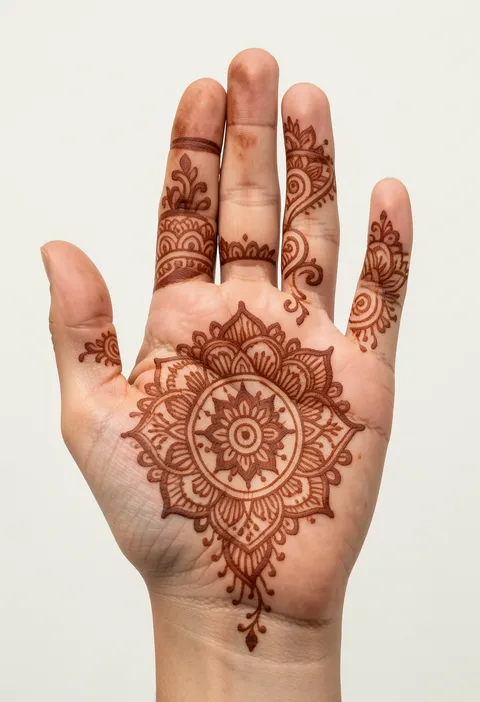
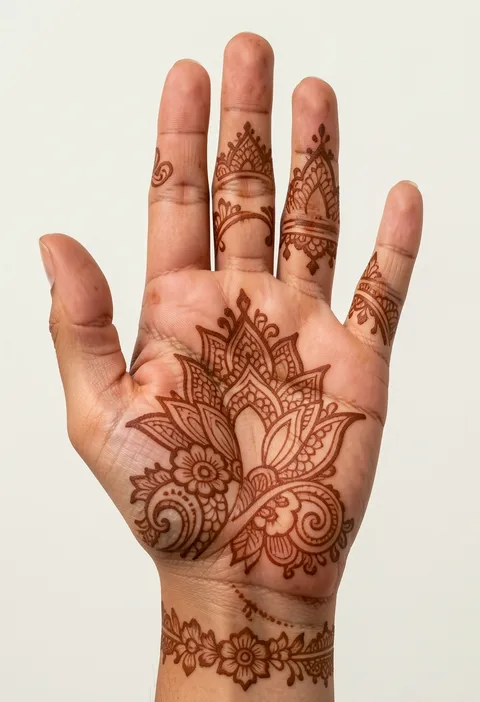
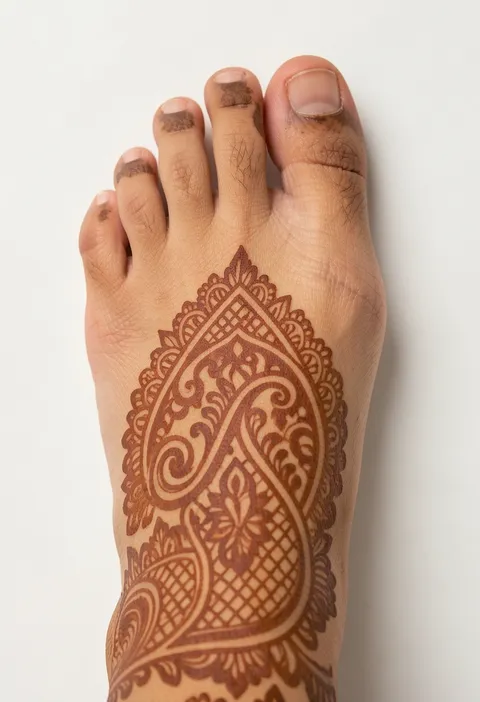
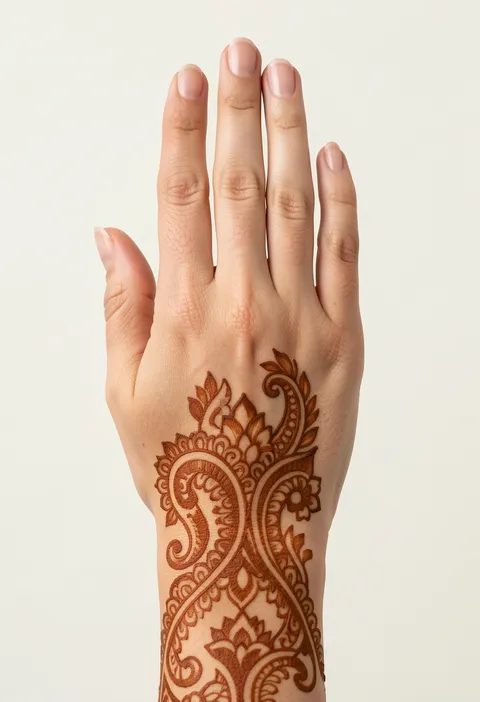
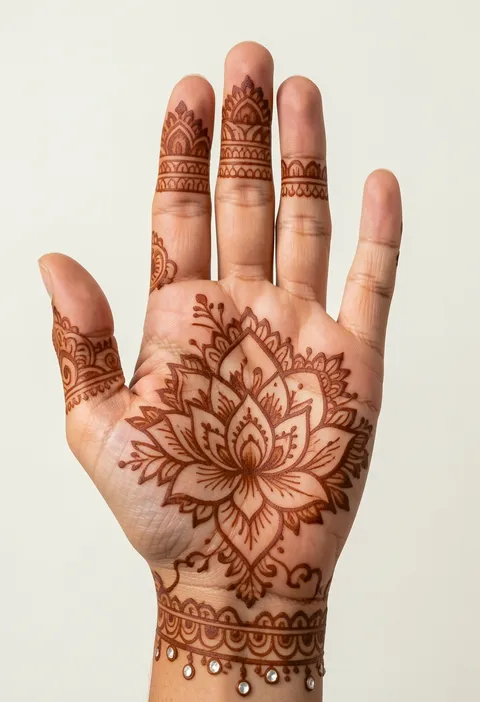
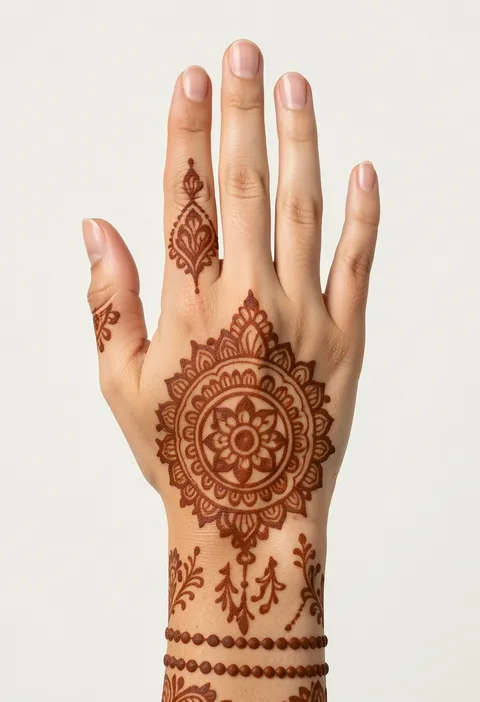
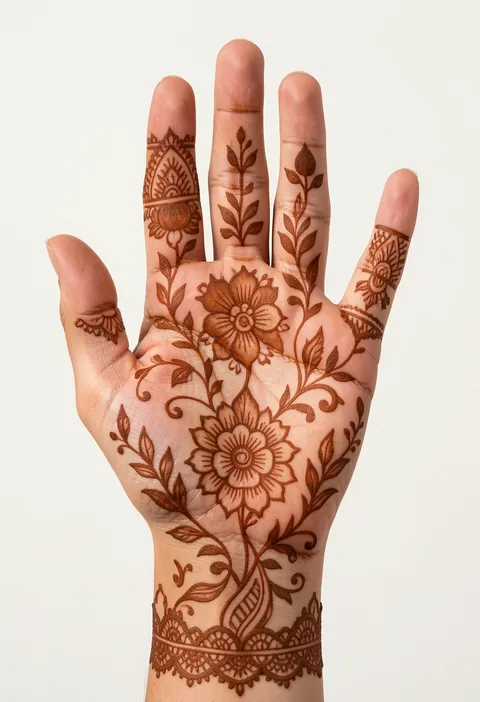
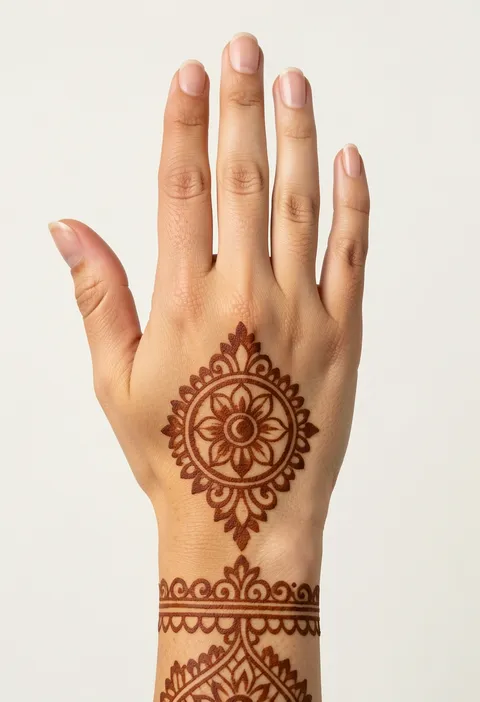
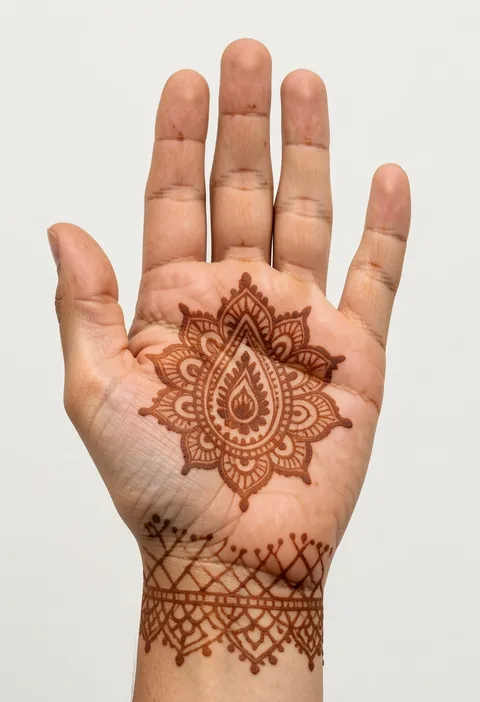
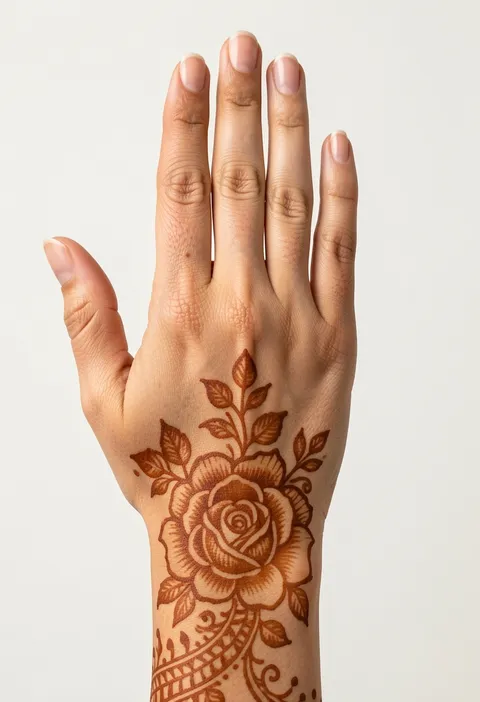
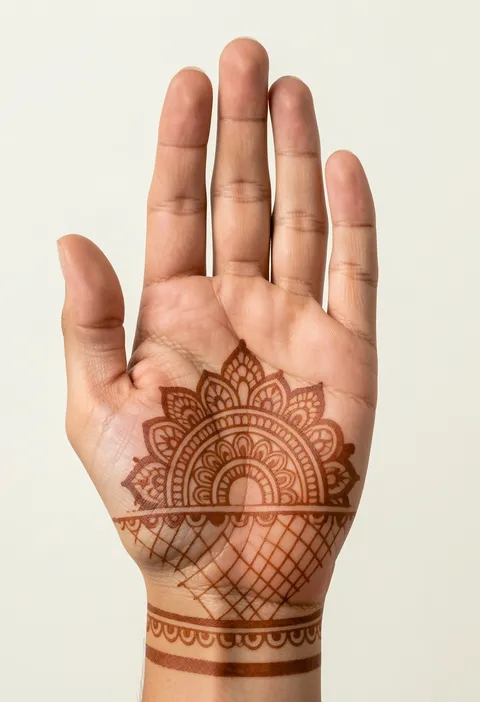
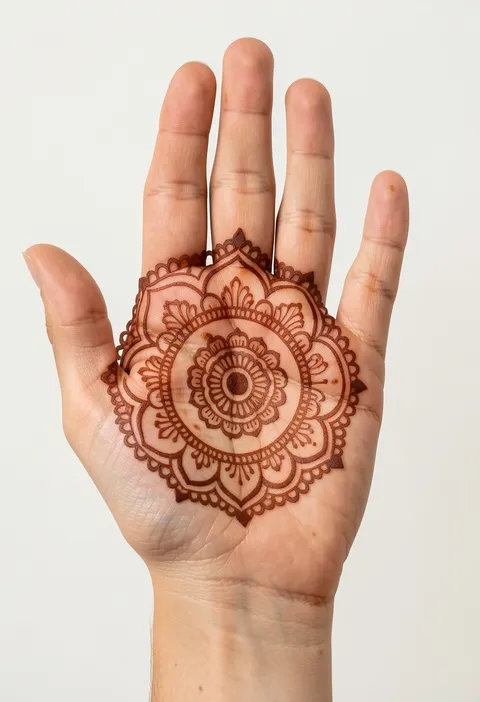
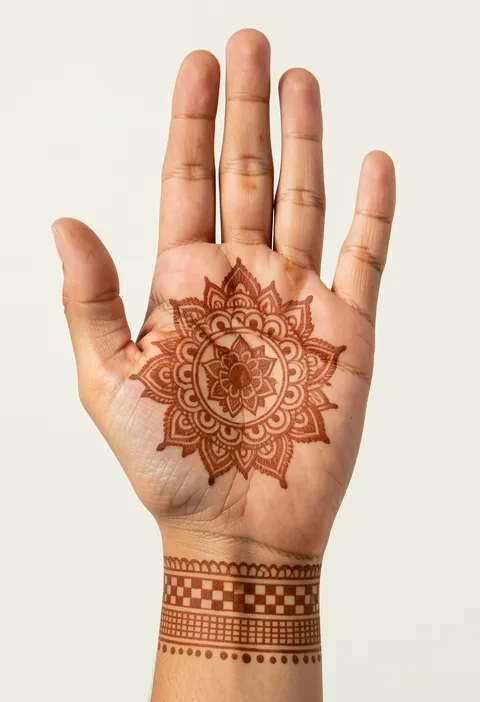
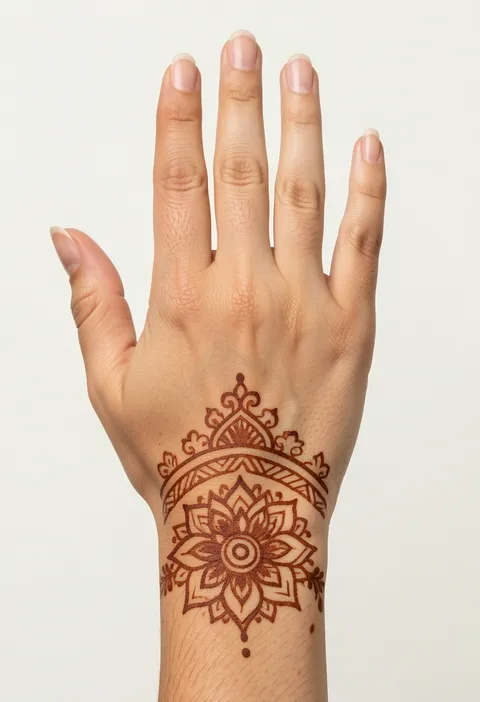
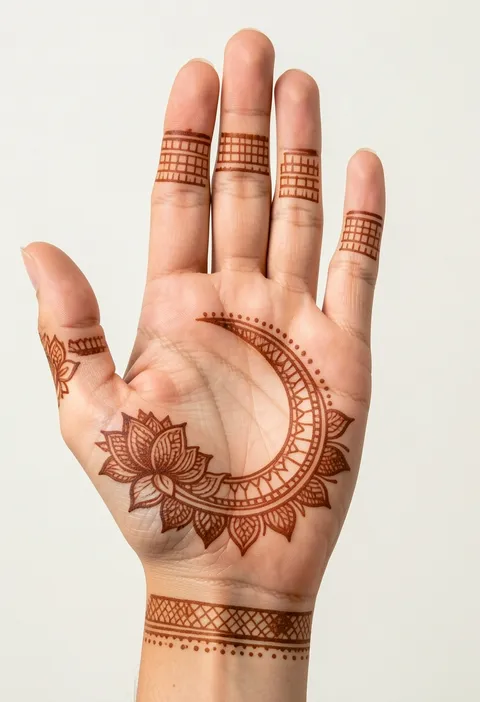
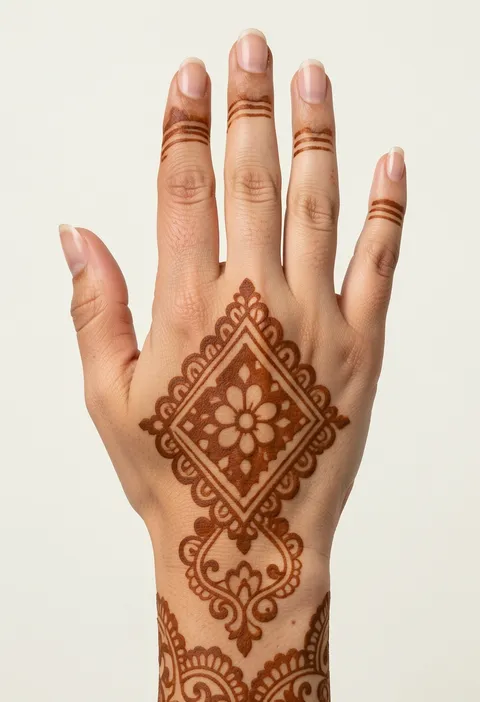
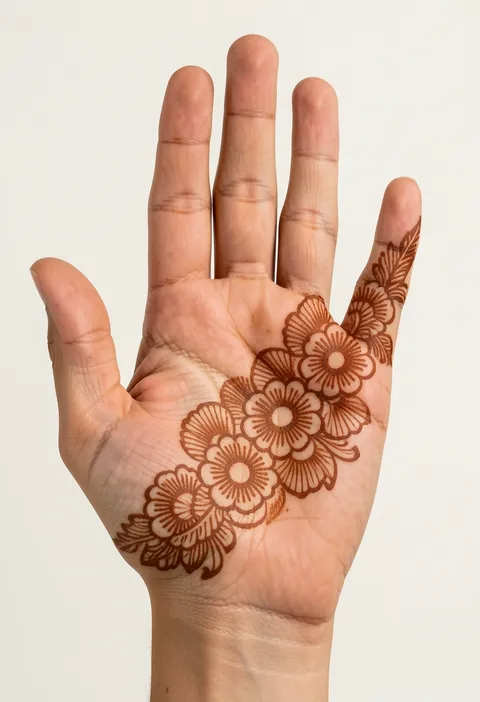
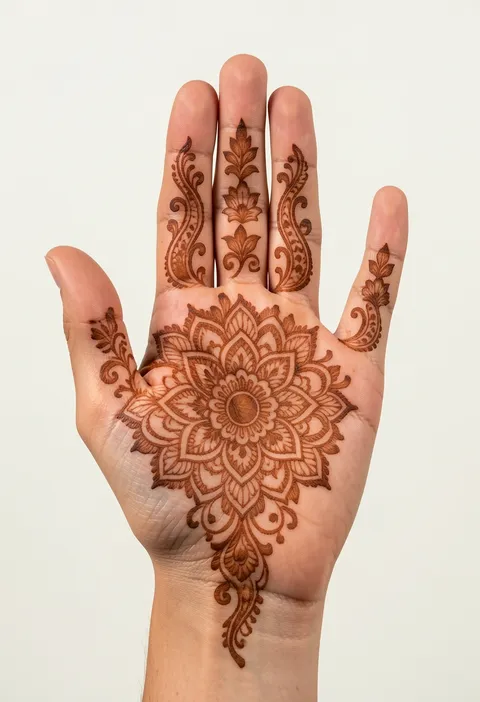
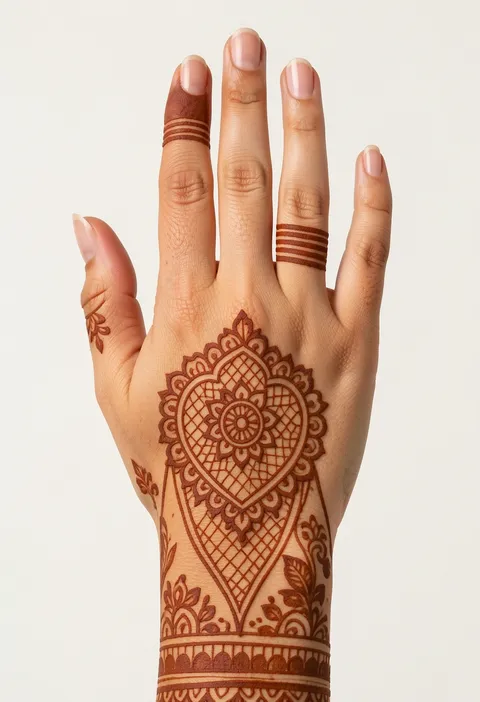
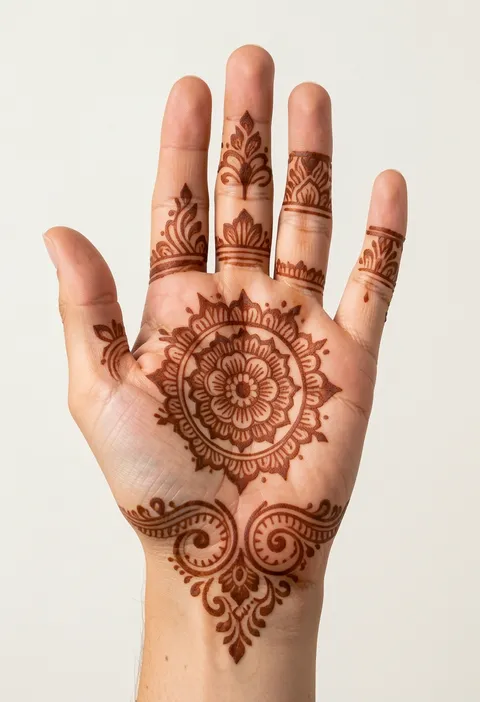
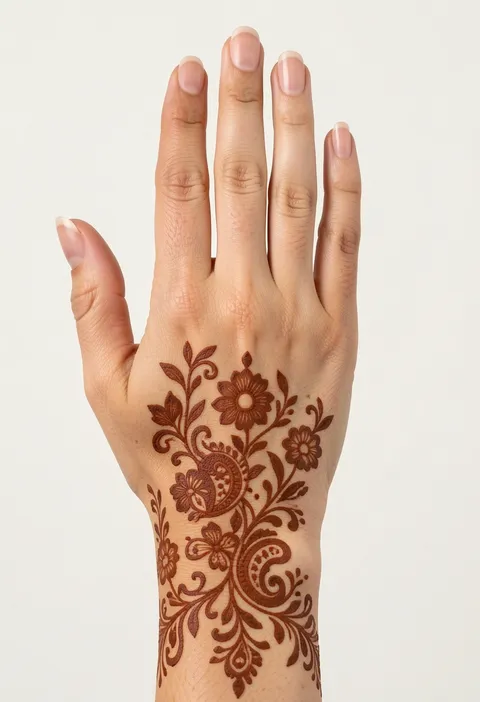
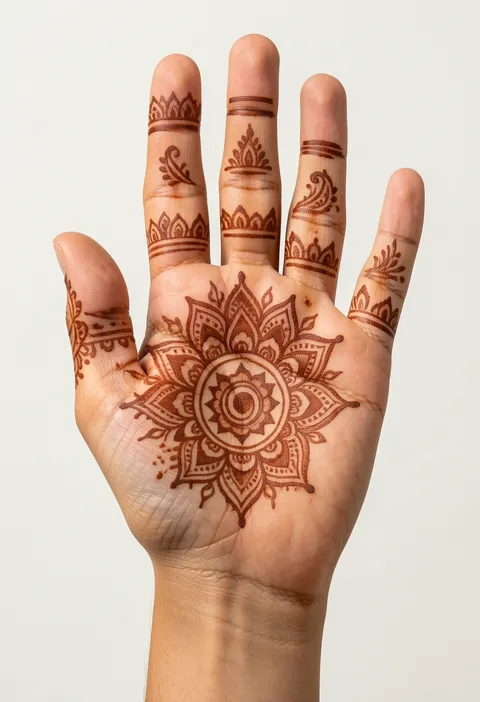
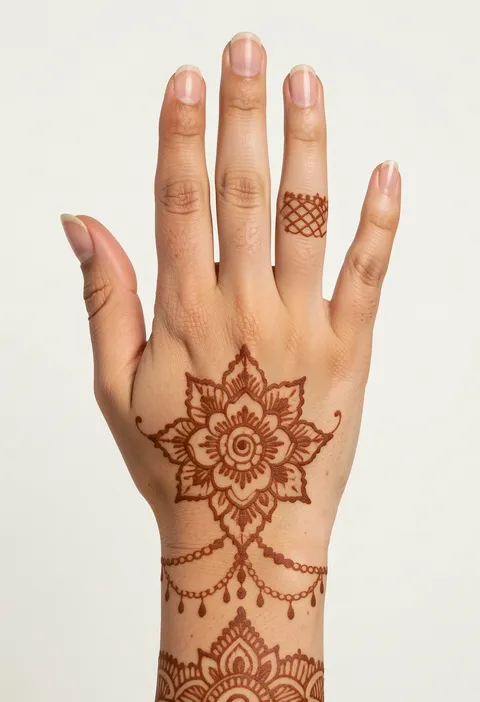
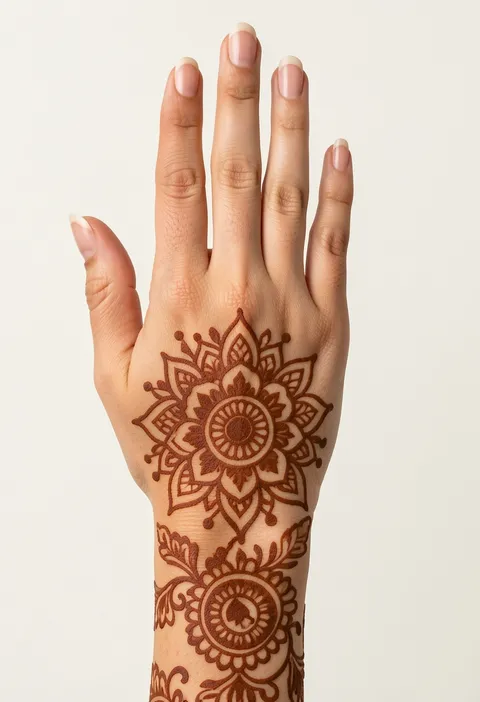
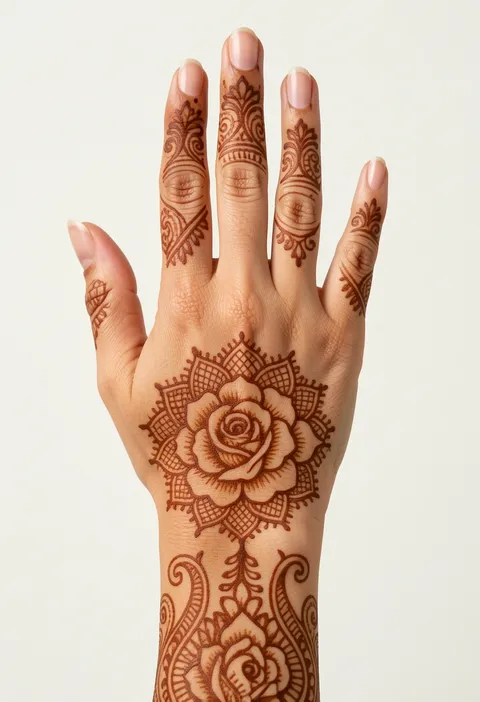
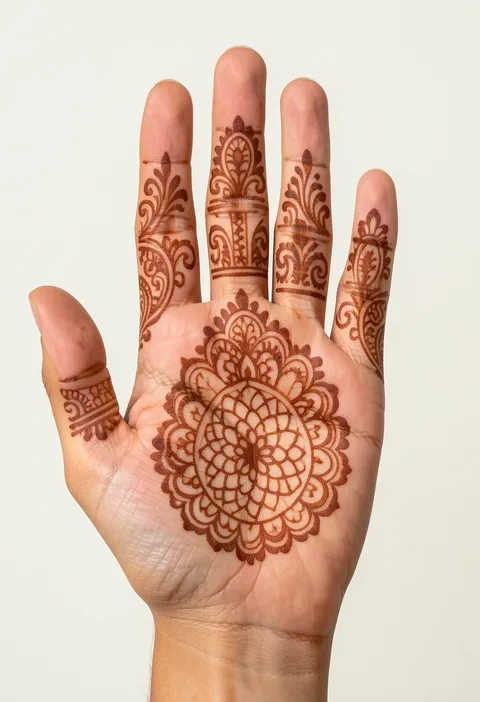
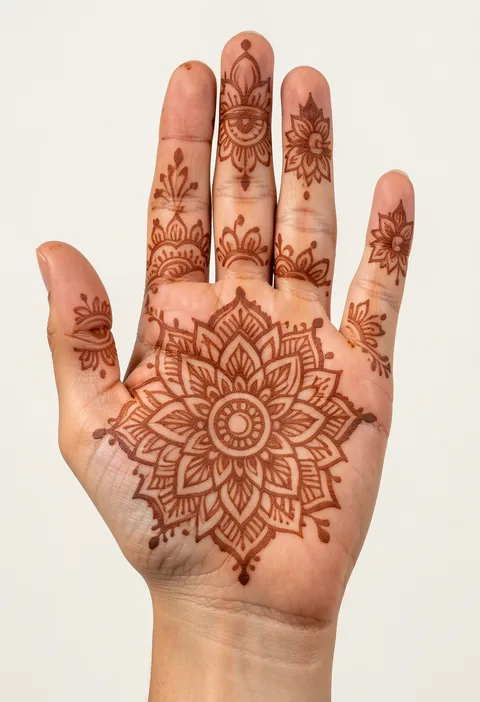
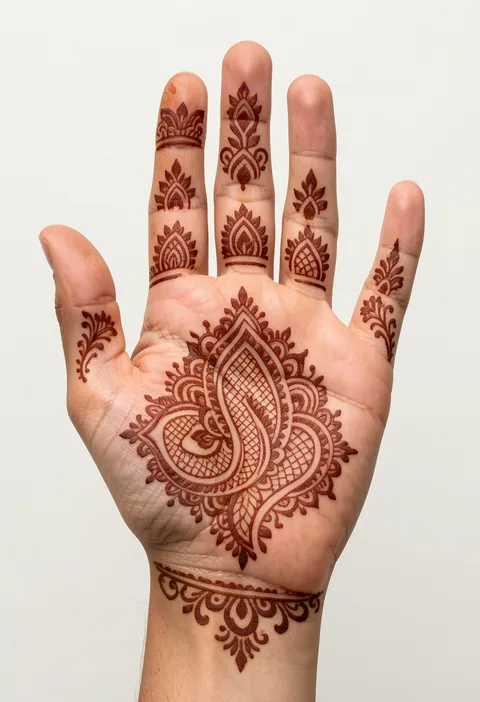
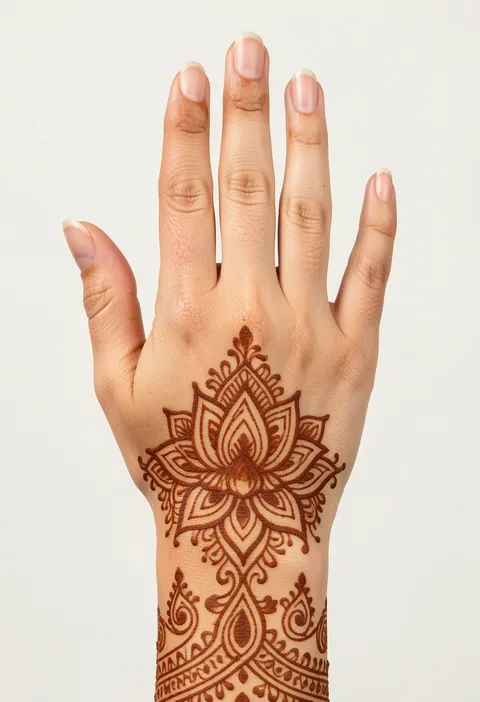
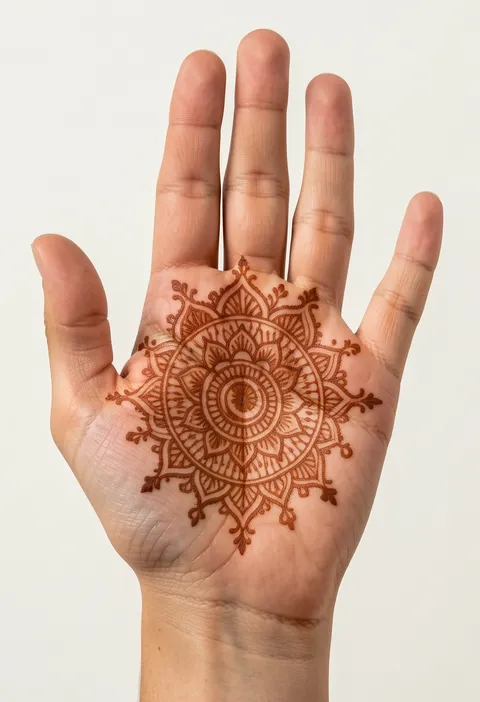
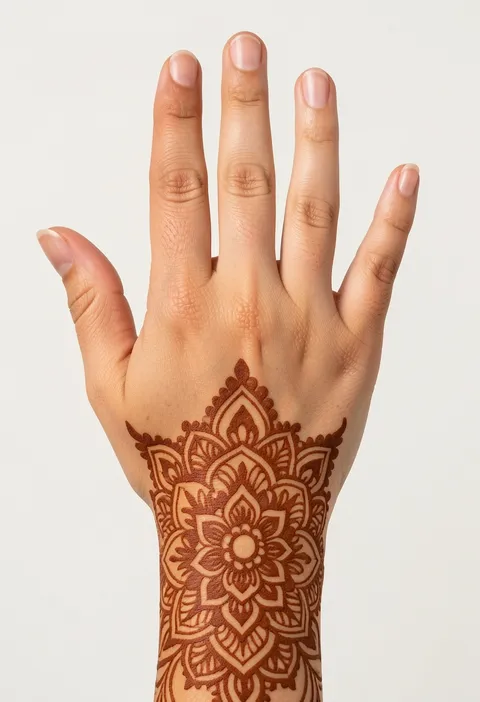
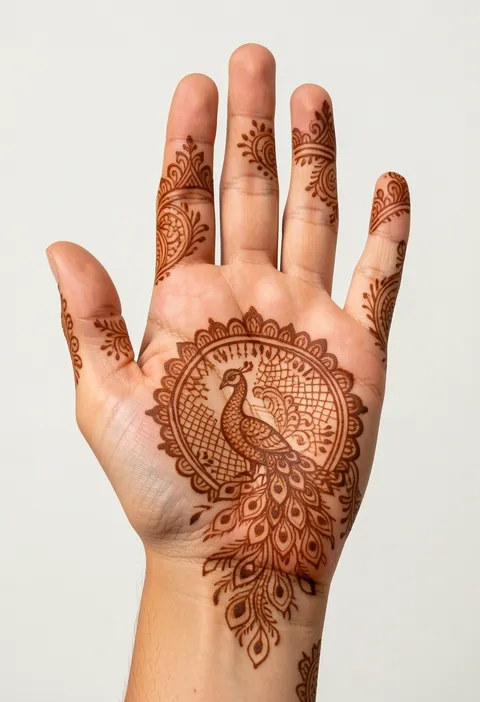
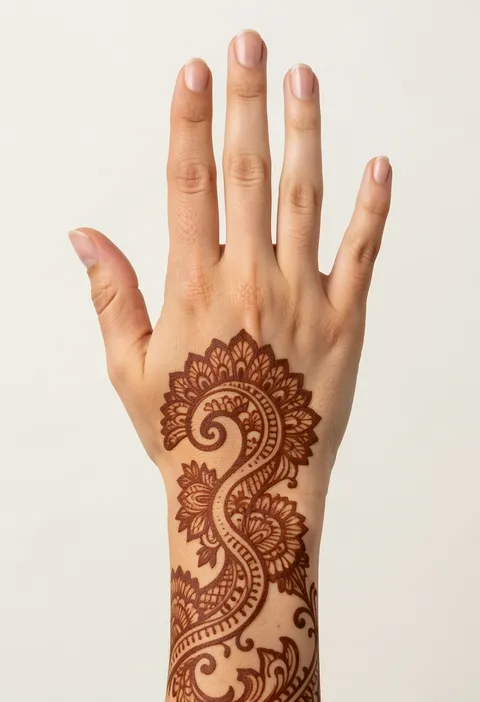
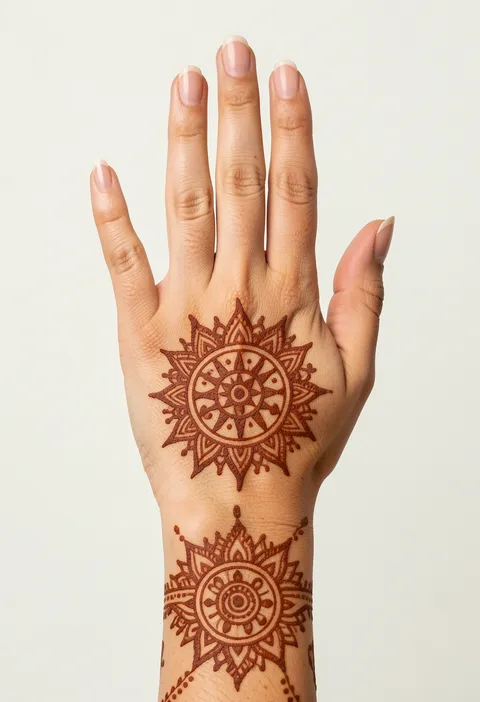
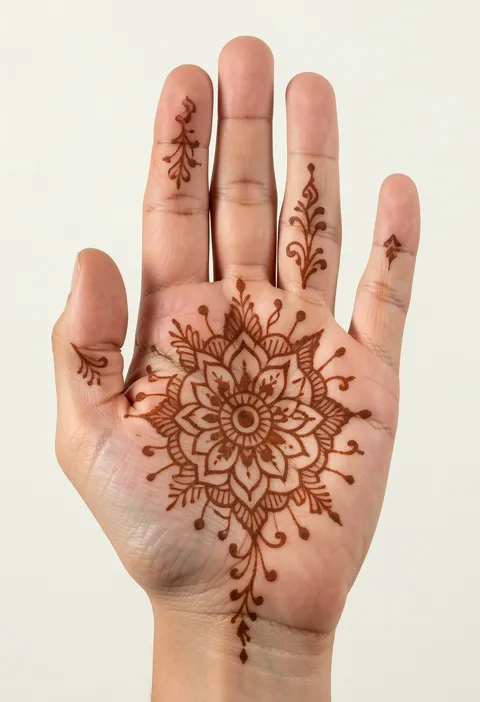
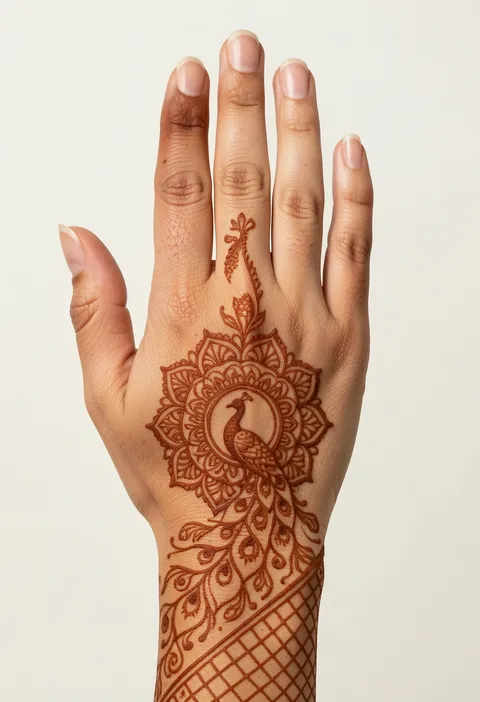
Most bridal hands are built in zones: a wrist band or cuff, a central medallion or figure, a lattice or jaal fill between them, and finger work that ends in caps at the tips. Leaving thin lines of clean skin between the zones keeps the pattern readable in photographs.
Popular centrepieces are a peacock, a lotus, a mandala or a bride-and-groom figure. Fingers are usually fully patterned with alternating bands and vines.
Planning the application
Book or schedule bridal mehndi two days before the wedding so the stain reaches its deepest colour. Each hand takes one to two hours, and feet another hour. Keep the paste on overnight if you can.
For the darkest stain, leave the paste on for at least six hours, keep the area warm, and avoid water for the first twelve hours after it flakes off.
Frequently asked questions
How many days before the wedding should bridal mehndi be applied?
Two days before. The stain darkens for 48 hours after the paste is removed, so it peaks on the wedding day.
How long does bridal mehndi take?
Three to five hours for both hands and feet with a professional artist, longer for full-arm designs.
Can I choose a lighter bridal design?
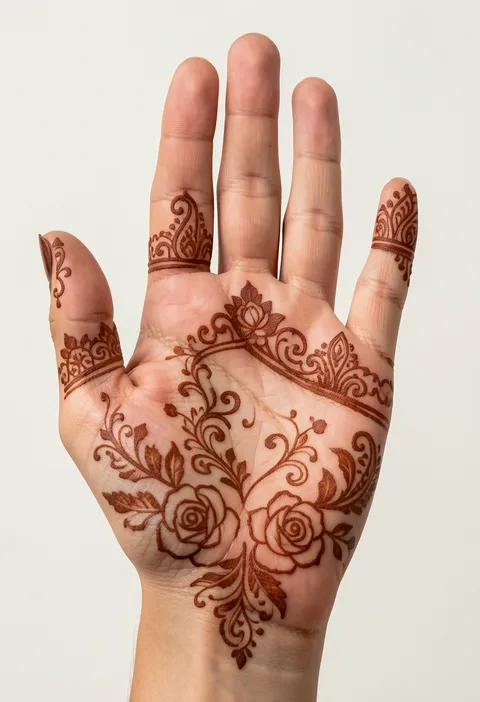
Yes. Many brides now pick a bridal-style centrepiece with open Arabic-style spacing. The bridal collection here includes both dense and lighter designs.
